
Have you ever stepped into a bathroom, said a few words, and heard your voice bounce back at you? That sharp, hollow sound is something almost everyone notices at some point. It can feel a little strange, especially when the same voice sounds perfectly normal in the bedroom, living room, or kitchen.
This effect is one of the main reasons people ask why do bathrooms echo so much. The answer is not complicated, but it does connect to how sound works and how modern bathrooms are usually designed.
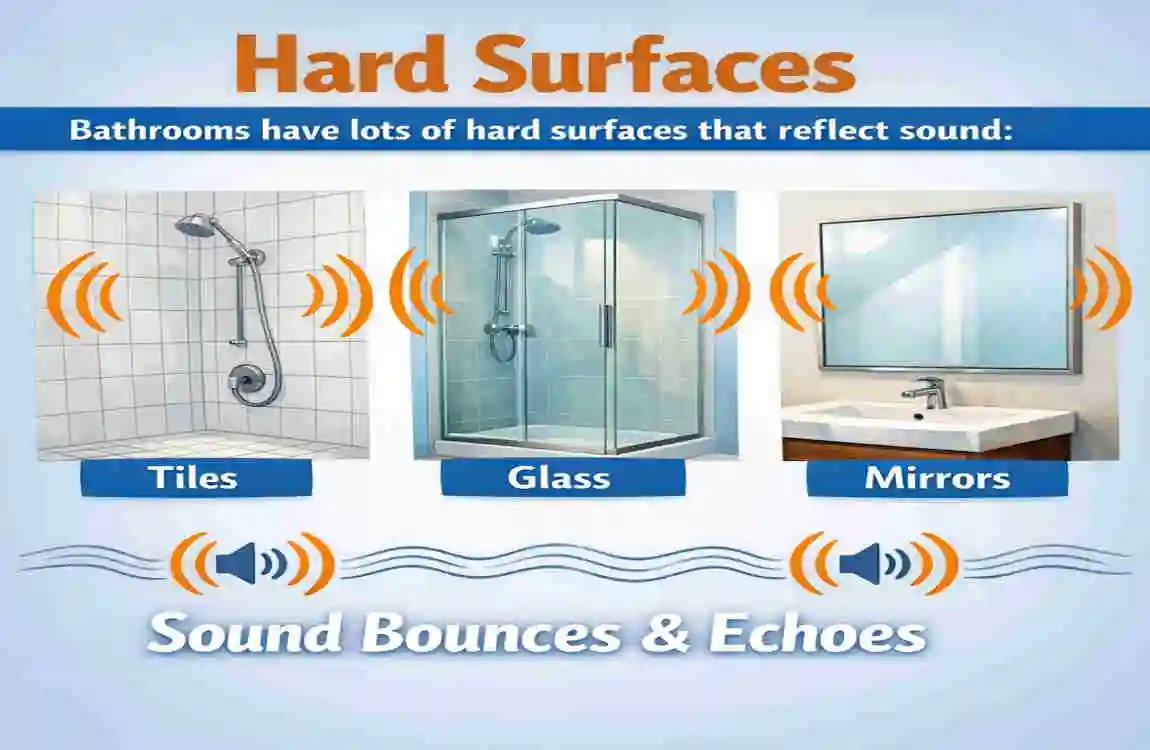
Bathrooms often have hard, smooth surfaces such as tile, glass, porcelain, and stone. These materials look clean and stylish, but they do not soak up sound very well. Instead, they throw sound back into the room. When that happens again and again, the sound feels louder, sharper, and more noticeable.
Modern homes make this even more obvious. Today’s bathrooms are often built with a clean, minimal look. They may have large mirrors, glass shower doors, polished walls, and very few soft items inside. That design may look beautiful, but it also creates the perfect setting for echo.
What Does Bathroom Echo Mean?
A simple definition of echo
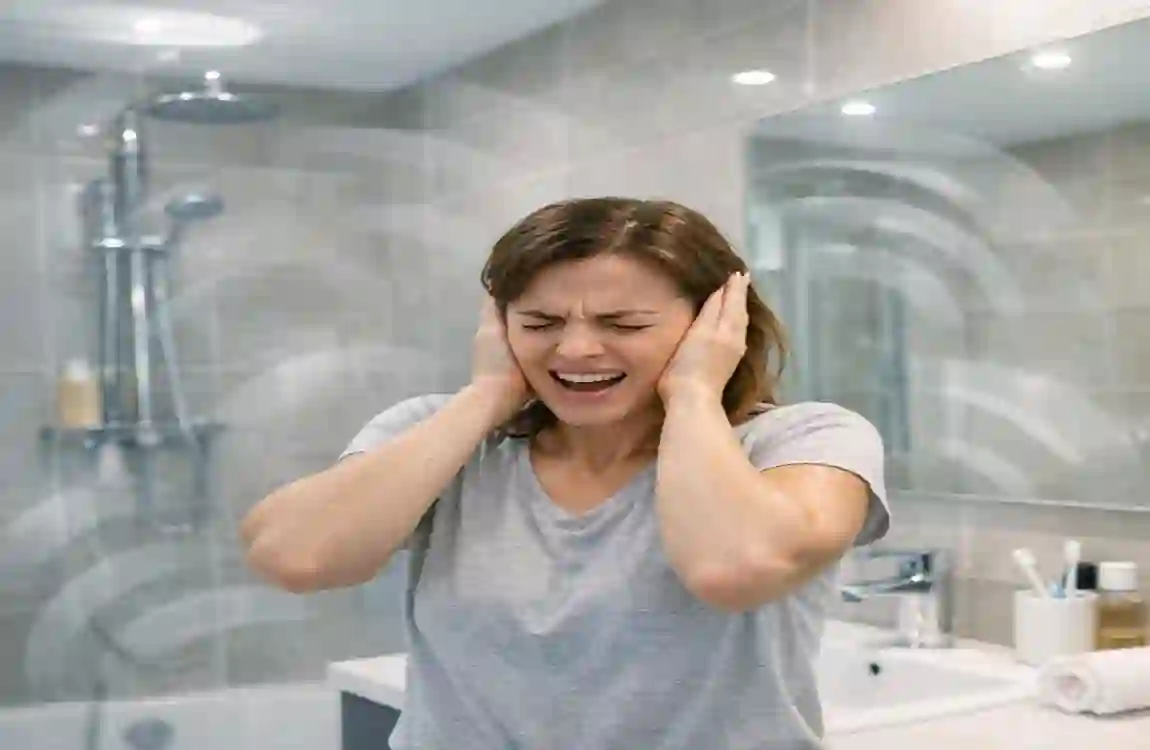
An echo happens when sound hits a surface and comes back to your ears after bouncing off that surface. In simple words, it is sound reflection. If you speak in a room and your voice is sent back to you, that is an echo.
Bathrooms are among the easiest places to notice this because of the materials commonly used in them. Your voice, a running tap, or even the sound of a door closing can feel brighter or more “bouncy” than in other rooms.
How sound behaves in enclosed spaces
Sound moves in waves. These waves travel through the air until they hit something. When they hit a soft object, such as a curtain or a couch, much of the sound is absorbed. When they hit a hard object, such as tile or glass, most of the sound is reflected.
In a bathroom, the walls, floor, and often the ceiling are usually made of hard materials. Since the room is enclosed, the sound has little space to escape. It stays inside and keeps reflecting off different surfaces.
That is why a bathroom can sound so different from a living room or bedroom. In a soft, furnished room, sound spreads out and is absorbed. In a bathroom, it keeps moving around.
Echo vs reverberation
People often use the word “echo” for any sound bounce, but there is a small difference between echo and reverberation.
- Echo is when you hear a clear repeat of a sound after it reflects off a surface.
- Reverberation occurs when sound reflections blend , creating a lingering effect.
In many bathrooms, what you hear is actually more like reverberation than a true echo. Still, most people simply call it “echo” because it is the easiest way to describe it.
Everyday examples in bathrooms
You may notice this effect when:
- brushing your teeth and talking
- singing in the shower
- turning on the tap
- closing the toilet lid
- calling out to someone in the next room
All of these sounds can feel louder and more noticeable because the bathroom gives them very little chance to fade naturally.
Why Do Bathrooms Echo So Much?
Hard surfaces reflect sound
The biggest reason bathrooms echo is simple: hard surfaces reflect sound.
Bathrooms are usually made of materials chosen for durability and ease of cleaning. These include:
- ceramic tile
- porcelain
- glass
- marble
- stone
- metal fixtures
These surfaces are smooth and solid. That makes them great for keeping water out and making cleaning easier, but not great for sound control. When sound waves strike these materials, they reflect rather than being absorbed.
The result is a room that acts almost like a sound mirror.
Soft materials are missing
In most other rooms, you find many soft things that help absorb sound. Think of carpets, curtains, cushions, sofas, fabric chairs, and even bookshelves filled with objects. These items break up sound waves and stop them from bouncing around too much.
Bathrooms usually do not have these items.
That means there is very little inside the room to soften the sound. Without fabric, padding, or other absorbent materials, the sound stays active in the room for longer.
This is one of the main reasons why do bathrooms echo more than other parts of the house.
Small enclosed space effect
Bathrooms are often small, which can make the echo feel stronger. In a small room, sound reaches the walls very quickly, bounces back, and comes to your ears again in a short time.
Because the room is compact, reflections occur quickly and repeatedly. Your brain hears this as a sharp sound or a hollow acoustic space.
In larger rooms, sound has more room to spread out. Even though large rooms can echo, the sound may feel less intense than in a small bathroom, where everything is very close together.
Flat walls and ceilings make things worse
Bathrooms often have plain walls, flat ceilings, and straight corners. These shapes are efficient at sending sound back in a predictable way.
Rounded furniture, open bookshelves, and layered decor can break sound up. But bathrooms usually have smooth, flat surfaces from top to bottom. That means the sound has fewer obstacles to slow it down.
This is why even a quiet bathroom can feel acoustically “hard.” The room may be small, but it behaves as a space where sound can bounce freely.
Minimal furniture means little sound absorption
Another reason bathrooms echo so much is the lack of furniture. There is usually no couch, no soft chair, and no large fabric surface to catch sound waves.
Even a few soft items can change the way a room sounds. But in most bathrooms, the design is kept minimal for hygiene and space-saving reasons. That leaves the sound with almost nothing to absorb into.
So when you ask why do bathrooms echo, the answer often comes down to this simple idea: the room is full of surfaces that reflect sound and almost empty of things that absorb it.
Why the effect feels more noticeable in modern homes
Older homes sometimes had more textured surfaces, thicker walls, or heavier materials that naturally softened sound a little. Modern homes, however, often use cleaner lines and polished finishes.
That makes the echo more obvious.
So while the bathroom may still be just as functional, it can feel more “live” acoustically. Your voice sounds bigger than expected, and every small noise seems to carry.
The Science Behind Bathroom Echo
Sound waves and reflection
To understand bathroom echo, it helps to picture sound as moving energy. When you speak, your voice creates waves that travel through the air. These waves move until they hit a surface.
When sound hits a hard surface, most of that energy is reflected. That is called reflection. In a bathroom, the reflected waves can bounce from wall to wall, floor to ceiling, and mirror to tile.
If the waves return to your ears very quickly, your brain notices the repeated sound. That is what creates the echo-like feeling.
Absorption vs reflection
There are two main ways sound behaves in a room:
- Absorption means the sound gets taken in by the material.
- Reflection means that sound bounces off the material.
Soft materials absorb more sound because they have tiny air pockets that trap sound energy. Thick fabrics, foam, and carpet are good examples.
Hard materials reflect more sound because they do not let the wave pass through or be easily trapped. Tile, glass, and stone are all strong reflectors.
A bathroom has much more reflection than absorption. That balance is the real reason it sounds the way it does.
The role of material density
Dense materials often reflect sound more strongly than lightweight, soft materials. This is because dense surfaces are harder for sound waves to move through.
Bathrooms contain many dense materials. For example, ceramic tile is dense. Stone is dense. Glass is dense. Even the sink and toilet are made from hard, solid materials.
This creates an environment where sound keeps bouncing off surfaces instead of fading away. The room becomes a place where sound energy stays active longer than it should.
Why some sounds stand out more than others
Not all sounds behave the same way. High-pitched sounds often reflect sharply and feel more noticeable in a bathroom. A clap, a whistle, or a loud voice may seem especially bright.
Lower sounds may not feel as sharp, but they can still linger. The room shape, size, and surface texture all affect how those sounds behave.
Bathrooms can also amplify certain frequencies. That means some parts of a sound may seem louder than others. You might not notice this consciously, but your ears definitely do.
Small rooms and fast reflections
In a small bathroom, the sound does not travel far before it hits a wall. That creates rapid reflections.
Your brain mixes those reflections, and the room sounds lively or hollow. The smaller and harder the room, the more noticeable this effect becomes.
This is why the same voice can sound normal in a large furnished bedroom but strange in a tiny bathroom. The room itself is shaping the sound before your ears even process it.
A simple way to think about it
Imagine throwing a ball into a room. In a room full of soft furniture, the ball would slow down and lose energy. In a bathroom made of tile and glass, the ball would bounce all over the place.
Sound works similarly.
That is the easiest way to understand why do bathrooms echo: the room gives sound very little to hold onto, so it keeps bouncing instead of dying out quickly.
Why Modern Houses Have More Bathroom Echo
Minimalist design is part of the problem
Modern interior design often focuses on clean lines, open space, and fewer visual distractions. That style looks elegant and calm, but it can create a room that’s more echo-prone.
A minimalist bathroom may have:
- large smooth walls
- glossy tile floors
- glass shower enclosures
- large mirrors
- simple fixtures
- almost no fabric
All of this looks sleek and modern, but it also reduces sound absorption.
Popular materials in today’s bathrooms
Many homeowners now prefer materials like marble, ceramic, and glass because they look premium and are easy to clean. These are excellent choices for moisture resistance, but not the best for sound comfort.
The more these materials dominate the room, the more the bathroom will reflect sound.
Open and boxy layouts
Modern bathrooms are often designed with simple geometric shapes. Straight walls, square corners, and open shower areas are common.
That kind of layout is visually neat, but it also gives sound more direct paths to bounce around. There are fewer soft breaks in the room to interrupt the reflections.
Fewer decorative sound absorbers
Older homes often had more clutter, thicker curtains, or decorative items that softened the room. Modern homes are more likely to keep bathrooms clean and simple, which means fewer sound-absorbing surfaces.
Even if the bathroom is stylish, the lack of decorative layers can make it acoustically bare.
Luxury design vs acoustic comfort
There is often a trade-off between visual style and sound comfort. A bathroom can look stunning with glossy tiles and glass walls, but still feel loud and empty.
That does not mean modern design is bad. It just means sound is not always the first thing designers focus on. In many cases, the goal is to make the bathroom feel bright, open, and luxurious.
Still, if you want the room to feel more comfortable, it helps to think about sound as part of the design too.
Common Problems Caused by Bathroom Echo
Conversations become less private
One common problem is privacy. When sound bounces around a bathroom, conversations can become easier to hear from outside the room.
That can feel awkward in a shared home. If someone is talking, running water, or even making a phone call in the bathroom, the sound may carry more than expected.
The sound can feel distorted
A bathroom echo can make your own voice sound strange. It may feel louder, thinner, or more metallic than usual.
This can be distracting and uncomfortable. It may also make it harder to judge your actual voice volume, which is why people sometimes end up speaking too softly or too loudly in the bathroom.
The room feels cold or empty
Echo is often linked with emptiness. When a room has too much sound reflection and too little absorption, it can feel bare.
That acoustic feeling can affect the mood of the space. Even if the bathroom looks clean and beautiful, it may still feel cold or unfinished because of how it sounds.
Noise feels more intense
Small sounds can become surprisingly noticeable in a bathroom. A dropped item, a running fan, or a closing cabinet door may sound sharper than it would in another room.
This can make the room feel louder overall, even if no one is actually making much noise.
How to Reduce Bathroom Echo
Add soft materials where possible
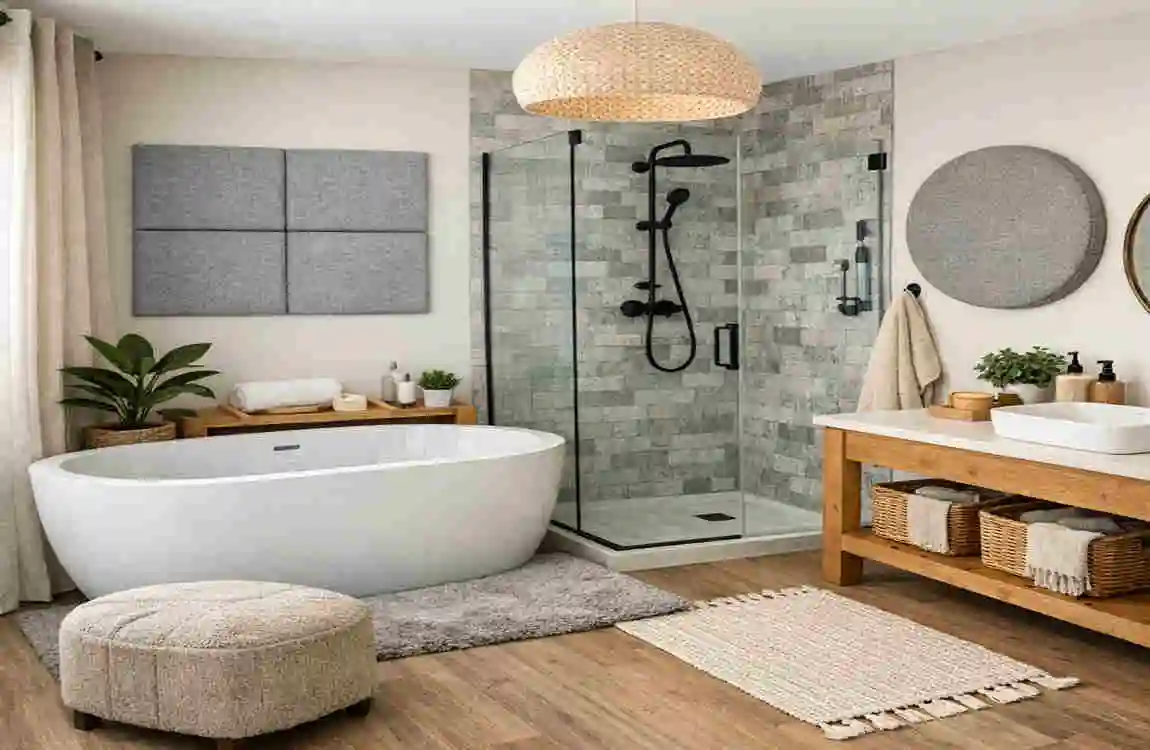
One of the easiest ways to reduce echo is to bring in soft materials. These help absorb sound before it bounces too many times.
You can use:
- bath mats
- cotton towels
- fabric shower curtains
- soft rugs made for damp areas
- upholstered storage pieces in nearby spaces
Even small changes can help. You do not need to cover the whole room. A few soft surfaces can make a real difference.
Use moisture-safe acoustic products
If you want stronger sound control, look for acoustic panels or foam products that are safe for humid spaces. Not every sound-absorbing material works well in a bathroom, so moisture resistance matters.
You want items that can handle damp air without falling apart or growing mold. This is especially important in bathrooms with showers or poor ventilation.
Consider a shower curtain instead of glass
Glass shower doors look elegant, but they reflect sound very well. If your goal is to reduce echo, a shower curtain can help because fabric absorbs more sound.
You do not have to remove glass if you love the look. But if echo is a problem, a curtain can improve the room’s acoustics in a simple, low-cost way.
Add wooden or textured decor
Wood is generally better for sound than glass or tile. Textured decor also helps break up sound reflections.
You might consider:
- a wooden stool or shelf
- a textured wall panel
- woven baskets
- natural fiber accessories
- decor with uneven surfaces
These details may seem small, but they reduce the room’s hard, flat feeling.
Bring in plants
Plants can help soften a room visually and acoustically. They do not completely solve echo, but they do add shape and texture to the space.
A plant with broad leaves can slightly disrupt sound and make the bathroom feel warmer and more inviting.
Improve layout and spacing
If you are designing or updating a bathroom, think about how open the space is. Too many empty, hard surfaces can make the echo worse.
A more balanced layout can help. Try to avoid unnecessary open wall areas if you can. Storage cabinets, shelves, and decor can reduce the “empty box” effect.
Practical ways to reduce echo without major remodeling
Here is a simple list of easy changes:
- Add a bath mat near the sink or shower.
- Use thicker towels and leave one or two visible in the room.
- Switch to a fabric shower curtain if possible.
- Place a plant on a shelf or counter.
- Use textured accessories instead of shiny ones.
- Store items neatly so the room feels less bare.
These small improvements can make the bathroom feel quieter and more comfortable without a full renovation.
while soft materials absorb it.
Design Tips for Better Bathroom Acoustics
Balance style and comfort
A beautiful bathroom does not have to sound harsh. You can keep the style you like and still make the space more comfortable.
The trick is balance. If almost everything in the room is shiny and hard, the echo will be stronger. If you mix in some soft or textured items, the sound becomes gentler.
Choose materials more carefully
When planning a bathroom, think beyond looks. Ask yourself how the material will feel acoustically.
For example, you might still use tile but choose it for one part of the room rather than every surface. You might keep the glass shower door, but pair it with softer textures elsewhere.
Small choices can create a better overall result.
Mix hard and soft surfaces
You do not need to remove all hard surfaces. Bathrooms need them for practical reasons. But you can reduce echo by mixing them with softer touches.
A good combination might include:
- tile floor
- painted wall with some texture
- cotton towels
- a fabric mat
- wooden shelf
- woven basket
This mix keeps the room practical and stylish while improving its sound.
Use smart storage
A bathroom that feels empty will often sound emptier too. Smart storage can help fill the space without making it cluttered.
Closed cabinets, shelves, and neatly arranged items can break up open areas and reduce the boxy feeling that echo creates. This makes the room more pleasant both visually and acoustically.
FAQs
Why do bathrooms echo more than other rooms?
Bathrooms echo more because they usually contain hard, smooth surfaces and very few soft materials. Tile, glass, and stone reflect sound, while carpets, curtains, and couches absorb it. Since bathrooms have little fabric or furniture, the sound keeps bouncing around.
Does tile cause bathroom echo?
Yes, tile is one of the main reasons bathrooms echo. It is durable and easy to clean, but it reflects sound strongly. The more tile a bathroom has, the more likely it is to sound sharp and hollow.
How can I reduce echo without remodeling?
You can reduce echo with simple changes like bath mats, thick towels, fabric shower curtains, plants, and textured decor. These items help absorb sound and make the room feel less empty.
Do small bathrooms echo more than large ones?
Often, yes. Small bathrooms can make echo more noticeable because sound hits the walls quickly and reflects right away. Larger bathrooms can echo too, but the effect may feel less intense depending on the layout and materials.
| Reason | Simple Explanation |
|---|---|
| Hard surfaces | Tiles, porcelain, and mirrors reflect sound waves instead of absorbing them |
| No soft materials | Bathrooms lack carpets, rugs, couches, or curtains that normally mute sound |
| Small enclosed space | Sound bounces frequently between walls, floor, and ceiling in a small room |
| Few obstacles | Minimal cabinets, furniture, or wall items to block sound waves |
| Acoustic reflectors | Ceramic tile is especially good at reflecting sound, and bathrooms are mostly tiled |
