
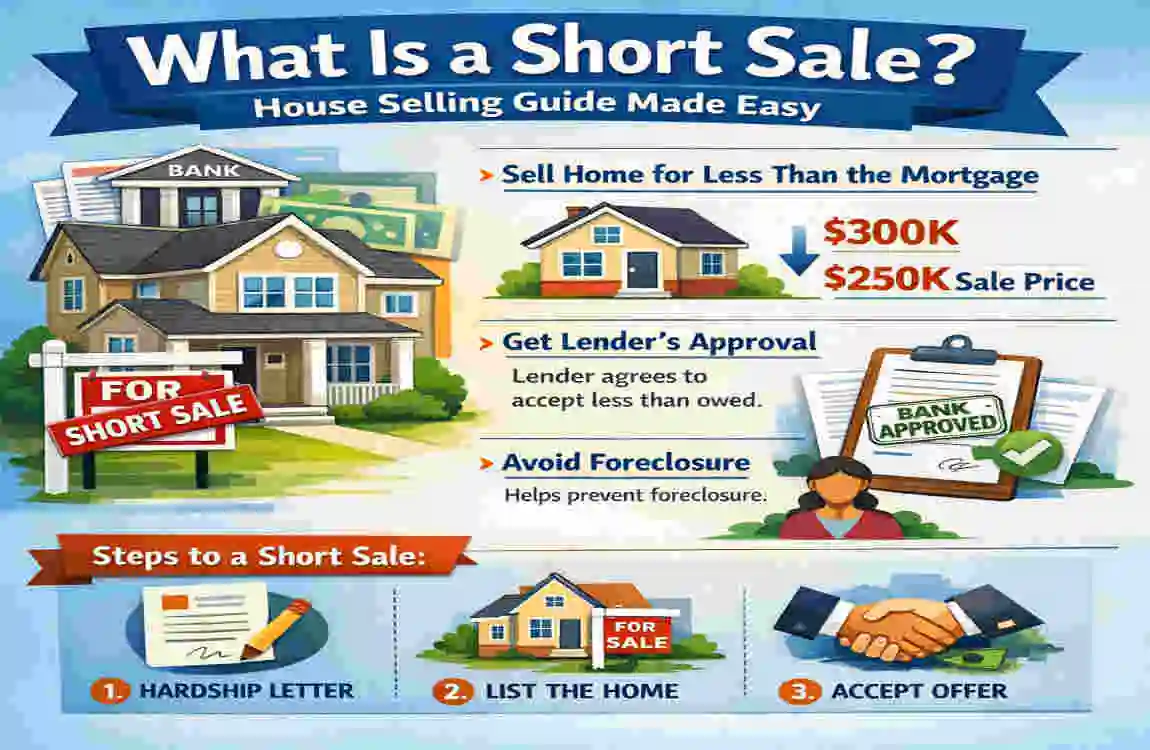
If you are trying to understand what a short sale in real estate is, this guide will make it easy to understand.
A short sale happens when a homeowner sells a house for less than the amount owed on the mortgage. The lender must agree to accept that lower amount. People usually choose this path when they are facing financial hardship and want to avoid the bigger damage of foreclosure.
What Is a Short Sale in Real Estate?

A short sale is a luxury home sale in which the final selling price is less than the remaining loan balance.
For example, if a homeowner still owes $250,000 on the mortgage but can only sell the house for $220,000, the lender may agree to take the lower amount. That is why it is called a short sale.
How It Is Different from a Normal Sale
In a regular home sale, the seller usually gets enough money to pay off the mortgage and keep any extra amount. In a short sale, the sale price does not fully cover the debt.
That means the lender must review the deal and approve it before the sale can proceed. Without lender approval, the short sale cannot happen.
Why Lender Approval Matters
The bank or mortgage company is the one taking the loss, so it wants to check:
- the homeowner’s financial situation
- the home’s market value
- the buyer’s offer
- Whether the sale is better than foreclosure
This makes the process slower than a normal sale, but often still better than losing the home through foreclosure.
How Does a Short Sale Work?
A short sale follows a few simple steps, though the process can take time.
The Homeowner Faces Financial Trouble
Most short sales start when the homeowner can no longer keep up with mortgage payments. This may happen because of:
- job loss
- medical bills
- divorce
- reduced income
- other serious money problems
The Home Is Listed for Sale
The luxury house is then put on the market, usually at a price that reflects its current value, even if that is less than what is owed.
A Buyer Makes an Offer
A buyer submits an offer just like in any other home purchase. The seller accepts it and sends it to the lender for review.
The Lender Reviews the Deal
The lender checks whether the offer is fair and whether a short sale makes sense compared to foreclosure. This can take days, weeks, or even months.
The Sale Is Approved or Rejected
If the lender approves, the sale moves forward and closes. If not, the deal may fall apart, and the seller may need to look at other options.
Why Do Homeowners Choose a Short Sale?
Homeowners usually choose a short sale to get out of a tough financial situation.
Common Reasons Include
- Job loss or lower income
- When monthly income drops, mortgage payments may become too hard to handle.
- Medical expenses
- Large medical bills can quickly create financial stress.
- Divorce or separation
- A change in household income can make the mortgage unaffordable.
- Avoiding foreclosure
- Many homeowners want to protect their credit as much as possible.
- Reducing debt pressure
- A short sale may help a person move on from a house that is no longer affordable.
Short Sale vs Foreclosure
These two terms are often confused, but they are not the same.
Main Differences
FeatureShort SaleForeclosure
Who starts it? Homeowner Lender
Is the home sold? Yes, usually by the owner. Not by choice
Lender approval needed? Yes No
Credit impact Less harmful in many cases Usually more damaging
Control over process More control Less control
Which Is Better?
In many situations, a short sale is less painful than foreclosure. It may still hurt credit, but it often gives the homeowner more dignity, more control, and sometimes a quicker path to recovery.
Foreclosure, on the other hand, can feel more sudden and may leave a stronger mark on the borrower’s financial record.
Pros and Cons of a Short Sale
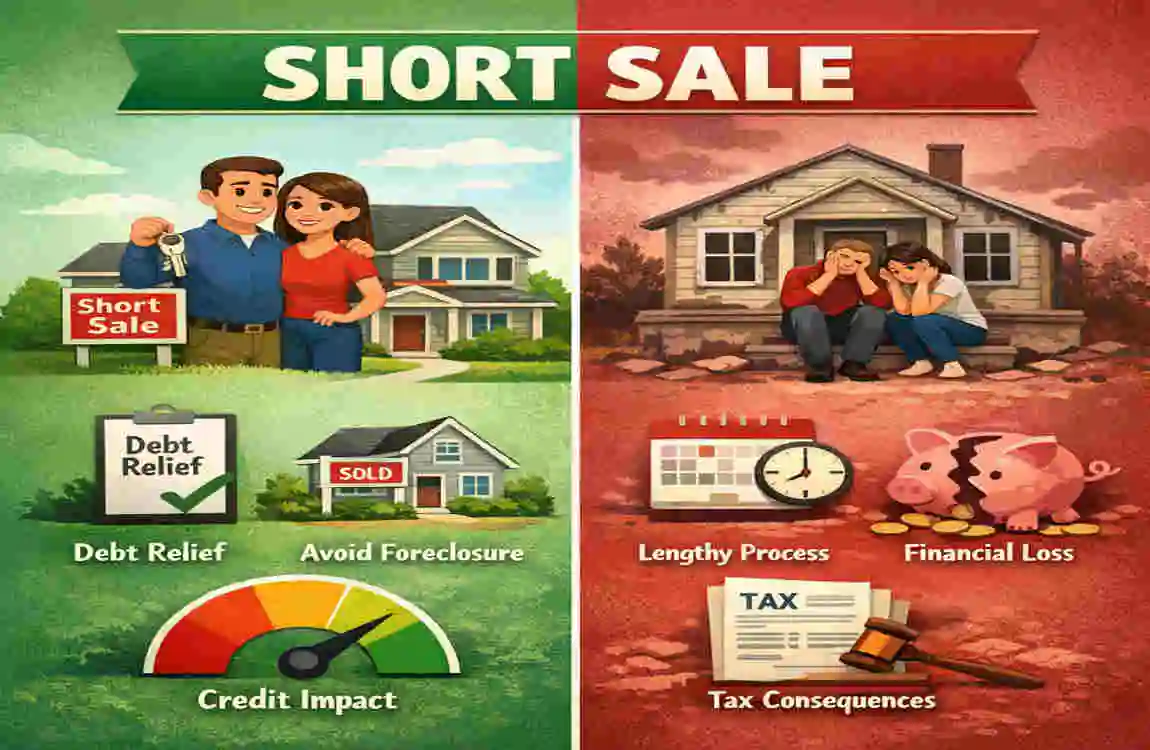
A short sale can be helpful, but it is not perfect.
Pros
- Less damage to credit than foreclosure
- More control over the sale
- May help avoid eviction
- Can reduce stress from unpaid mortgage debt
Cons
- Lender approval is required
- The process can take a long time
- There may be tax or debt issues
- Approval is not guaranteed
So, while a short sale can be a smart option, it still comes with real challenges.
Who Qualifies for a Short Sale?
Not every homeowner can do a short sale. Lenders usually want proof that the seller truly needs help.
You May Need to Show:
- financial hardship
- proof that the luxury home is worth less than the mortgage balance
- mortgage statements
- income records
- bank statements
- a hardship letter
FAQ
What is a short sale in real estate?
A short sale is when a homeowner sells a property for less than the mortgage balance, and the lender agrees to the lower payoff amount.
Is a short sale better than foreclosure?
In many cases, yes. A short sale is usually less harmful to credit and gives the homeowner more control.
How long does a short sale take?
It can take a few weeks to several months, depending on lender review and paperwork.
Do I still owe money after a short sale?
Sometimes the lender forgives the remaining balance, but not always. It depends on the agreement.
Can I buy another house after a short sale?
Yes, but you may need to wait before qualifying for a new mortgage.
| Topic | Explanation |
|---|---|
| What Is a Short Sale? | Selling your home for less than the outstanding mortgage balance, with lender approval |
| When It Happens | Homeowner faces financial hardship and can’t keep up with mortgage payments |
| Main Benefit | Avoids foreclosure, which is more costly and time-consuming for the lender |
| Who Must Approve | The mortgage lender must approve the sale since they’ll receive less than owed |
| Sale Proceeds | Go to the lender; the remaining balance is usually waived in most cases |
| Key Steps | 1. Contact lender & prove hardship 2. Hire a short-sale-specialized agent 3. Gather financial documents 4. List home & get buyer offer 5. Submit offer to lender for approval |
| Typical Timeline | Longer than traditional sales due to lender approval process |
