
Real estate is one of the most important parts of the economy. It includes the buying, selling, renting, and management of land and buildings. If you have ever wondered which industry real estate belongs to, the simple answer is that it belongs to the property and construction sector.
This industry stays important because people always need places to live, work, and invest. In 2026, the real estate market is changing rapidly due to technological advances, lifestyle shifts, and the demand for better, more flexible spaces.
What Industry Is Real Estate?

Definition of the Real Estate Industry
Real estate covers everything related to property. That includes buying homes, renting apartments, leasing office space, selling land, and managing buildings. It also includes services like property development, appraisal, brokerage, and facility management.
The industry is usually divided into four main parts: residential, commercial, industrial, and land. Each one serves a different need, but all of them work together to support daily life and business growth.
Why Real Estate Is Important to the Economy
Real estate is a major economic driver because it creates jobs for agents, builders, architects, lenders, inspectors, and property managers. It also supports many related industries, such as furniture, banking, insurance, and construction materials.
It is also a strong way to build wealth. Many people use property to save money over time, earn rental income, or grow long-term value. On top of that, real estate helps shape cities, roads, neighborhoods, and public infrastructure.
Major Segments of the Real Estate Industry
SegmentDescription
Residential Homes, apartments, condos
Commercial Offices, retail spaces
Industrial Warehouses, factories
Land Vacant land and development sites
Overview of the Real Estate Market
Current Market Conditions
The real estate market in 2026 is being shaped by steady housing demand, limited inventory in many places, and changing property values. In some areas, homes are still hard to afford, while rental demand remains strong.
Commercial property is also adapting to new business habits. Some spaces are in lower demand, but others, like warehouses and flexible offices, are growing quickly.
Factors Driving Industry Growth
Population growth is one of the biggest forces behind real estate demand. More people mean more homes, schools, shops, and workplaces.
Urban growth also plays a big role. As cities expand, developers look for new ways to build housing and commercial spaces. Economic recovery in many regions is also helping the market stay active.
Key Trends in the Real Estate Industry
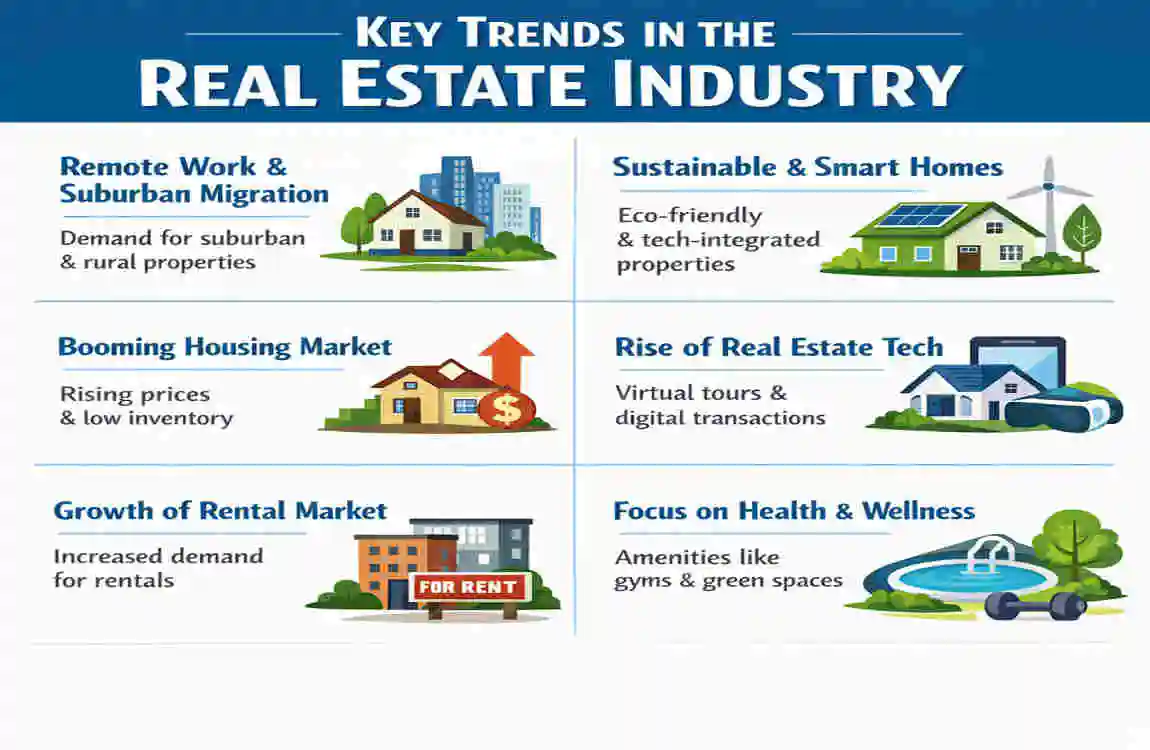
Rise of Smart Homes
Smart homes are becoming more popular because people want comfort, safety, and lower energy bills. These homes use connected devices for lighting, temperature control, security, and entertainment.
This trend is not just about convenience. It also helps homeowners save time and manage their homes more efficiently.
Sustainable and Green Buildings
Green buildings are growing fast because buyers and businesses care more about energy use and the environment. These buildings use eco-friendly materials, better insulation, solar power, and water-saving systems.
Many properties now also aim for green certifications. This can raise property value and reduce long-term costs.
Increased Use of Artificial Intelligence
AI is changing real estate in helpful ways. It can estimate property values, suggest better listings, answer customer questions, and even predict market trends.
For buyers and investors, AI makes decisions easier. For agents and managers, it saves time and improves service.
Virtual Property Tours
Virtual tours make it possible to explore a property without visiting it in person. This is especially useful for busy buyers, international clients, and people moving to a new city.
3D walkthroughs create a better experience and help people make faster decisions. They also reduce time wasted on unsuitable property visits.
Growth of Remote Work Communities
Remote work has changed where people want to live. Many buyers now prefer suburban or smaller-city homes where they can get more space for the same money.
Home office space has become a major selling point. People want flexible layouts, quieter neighborhoods, and a better work-life balance.
Real Estate Technology (PropTech)
PropTech is making the entire industry more digital. Online renting, digital contracts, virtual paperwork, and automated property management are now common in many markets.
This makes transactions faster and easier. It also helps landlords and buyers stay organized with less manual work.
Main benefits of PropTech:
- Faster property transactions
- Easier communication
- Better record keeping
- More convenient renting and buying
Trends in Residential Real Estate
Demand for Affordable Housing
Affordable housing remains a major need because home prices have risen in many areas. Buyers want smaller, simpler, and more budget-friendly homes.
Governments and developers are trying to support this demand through housing programs, tax help, and new construction plans.
Multifamily Property Growth
Apartments and rental communities are still in high demand. Many people prefer renting because it is more flexible and often easier than buying.
For investors, multifamily properties can provide steady income and long-term value.
Lifestyle-Focused Developments
People now want more than just a place to sleep. They want neighborhoods with parks, shops, cafes, walking paths, and shared amenities.
This is why mixed-use communities are becoming more common. They make daily life easier and more connected.
Trends in Commercial Real Estate
Hybrid Work Impact on Office Spaces
Hybrid work has changed what businesses need from office space. Many companies now want smaller, more flexible office layouts instead of large, traditional layouts.
Coworking spaces and shared offices are growing because they allow businesses to stay adaptable and control costs.
Growth of Logistics and Warehouses
Online shopping continues to support strong demand for warehouses and logistics hubs. Companies need more space to store products and deliver them quickly.
This is one of the strongest parts of the commercial market right now because e-commerce continues to expand.
Retail Space Transformation
Retail spaces are changing too. Stores now focus more on experience, service, and brand connection rather than just selling products.
Many retailers are using smaller spaces in better locations and blending online and in-person shopping.
Real Estate Investment Trends
Real Estate Investment Trusts (REITs)
REITs let people invest in real estate without buying a property directly. This is helpful for investors who want income and diversification with less management work.
They are a simple way to enter the market and spread risk across different property types.
Fractional Property Ownership
Fractional ownership is opening the door for smaller investors. Instead of buying a whole property, people can own a share of one.
Digital platforms are making this model easier to access, especially for younger or first-time investors.
International Real Estate Investments
Some investors are looking beyond their local markets for new opportunities. International real estate can offer better returns or a way to reduce risk.
Still, buyers should study the market carefully because laws, taxes, and demand can vary a lot from country to country.
Challenges Facing the Real Estate Industry
High Interest Rates
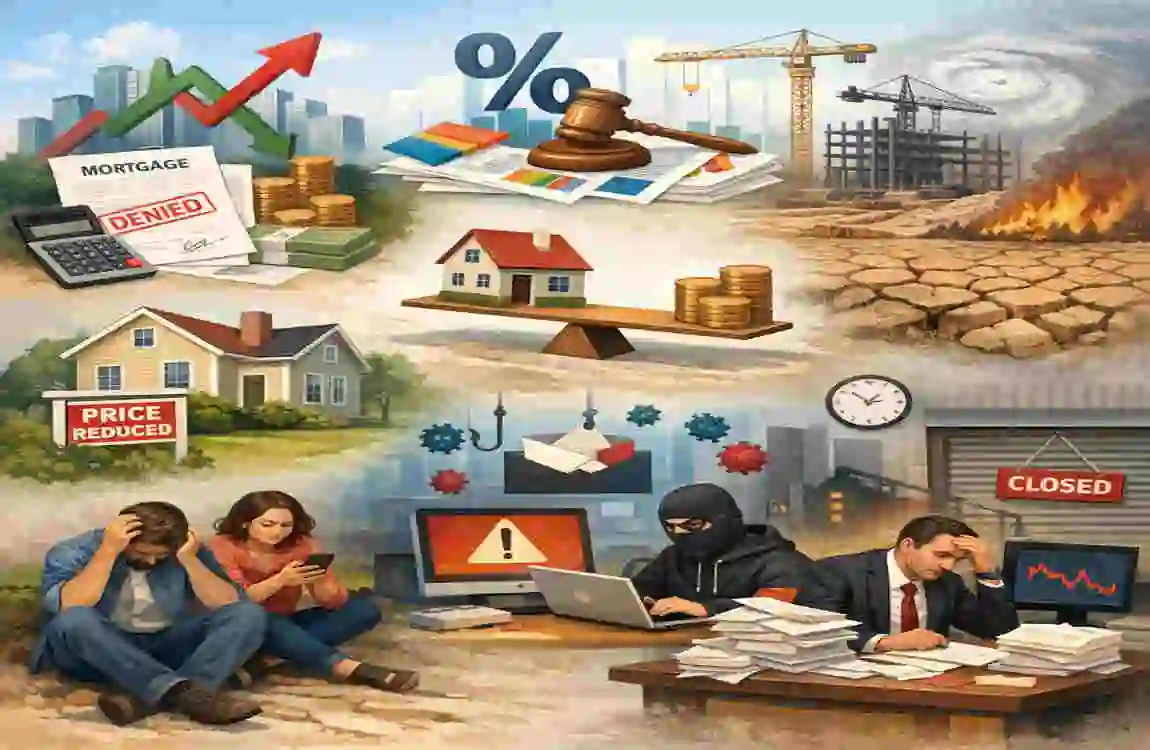
High interest rates make mortgages more expensive. This can reduce buyer demand and slow investment activity.
It can also make it harder for first-time buyers to enter the market.
Housing Supply Shortages
Many regions still lack sufficient housing. Construction delays, high material costs, and land limits all make the problem worse.
When supply is low, prices often remain high, creating more pressure on buyers.
Economic Uncertainty
Inflation, job market changes, and market shifts can all affect real estate. When people feel unsure about the economy, they may delay buying or investing.
That is why flexibility matters so much in this industry.
Future Outlook for the Real Estate Industry
Emerging Technologies
The future of real estate will likely include even more digital tools. Blockchain may improve property transactions, while AI may manage buildings and predict market needs more accurately.
These tools can save time, reduce errors, and improve trust.
Sustainable Development Growth
Green housing and eco-friendly buildings will continue to grow as people seek lower utility costs and more environmentally friendly options.
Rules around energy use and development may also push the market in this direction.
Long-Term Investment Potential
Real estate remains a strong long-term investment because people always need property. Even when the market changes, land and buildings keep their value as useful assets.
For many buyers and investors, real estate is still a reliable path to wealth building.
Frequently Asked Questions
What industry is real estate?
Real estate is a sector within the property and construction industry focused on buying, selling, leasing, and managing land and buildings.
What are the biggest trends in real estate today?
Smart homes, sustainable construction, AI technology, virtual tours, and remote-work-driven housing demand are among the biggest trends.
Is real estate a growing industry?
Yes, real estate continues to grow due to population increases, urban development, and technological innovation.
How is technology changing real estate?
Technology improves property searches, virtual tours, digital transactions, and market analysis through AI and PropTech solutions.
What is the future of the real estate industry?
The future includes greater use of AI, smart homes, green building practices, blockchain transactions, and digital property investments.
| Key Trend | What It Means |
|---|---|
| Lower interest rates | Borrowing costs are dropping, encouraging more commercial real estate transactions and price discovery |
| Data center boom | AI and cloud storage demand is driving soaring interest in data centers, with virtually no vacant space in major markets |
| Climate risk integration | Homebuyers and investors now factor flooding, wildfires, and extreme heat into decisions; nearly half of homes face severe climate risks |
| Multifamily supply glut | High-growth Sunbelt markets face oversupply from apartment deliveries, though demand stays strong due to job growth and immigration |
| Rising insurance costs | Climate change risks are pushing up insurance costs, affecting both commercial and housing markets |
| Top markets shift | Dallas-Fort Worth, Miami, Houston, and Tampa lead the 2025 top markets to watch, reflecting Sunbelt momentum |
