
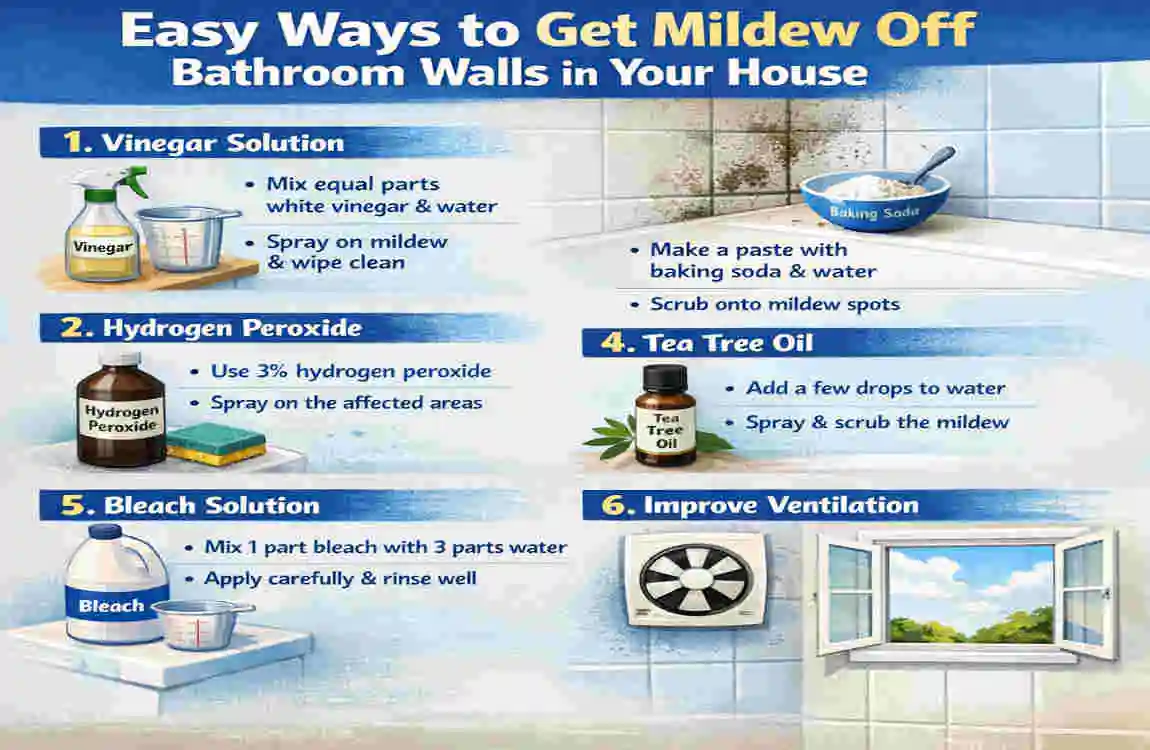
If you are searching for how to get mildew off bathroom walls, the good news is that it is usually easy to clean if you catch it early. Mildew often shows up in bathrooms because of moisture, heat, and poor airflow. It can leave dark spots, a stale smell, and even damage paint over time.
The best part is that you do not always need harsh chemicals. In many cases, simple home cleaners like vinegar, baking soda, or Hydrogen‘s’s’s peroxide can do the job well.
What Causes Mildew on Bathroom Walls?
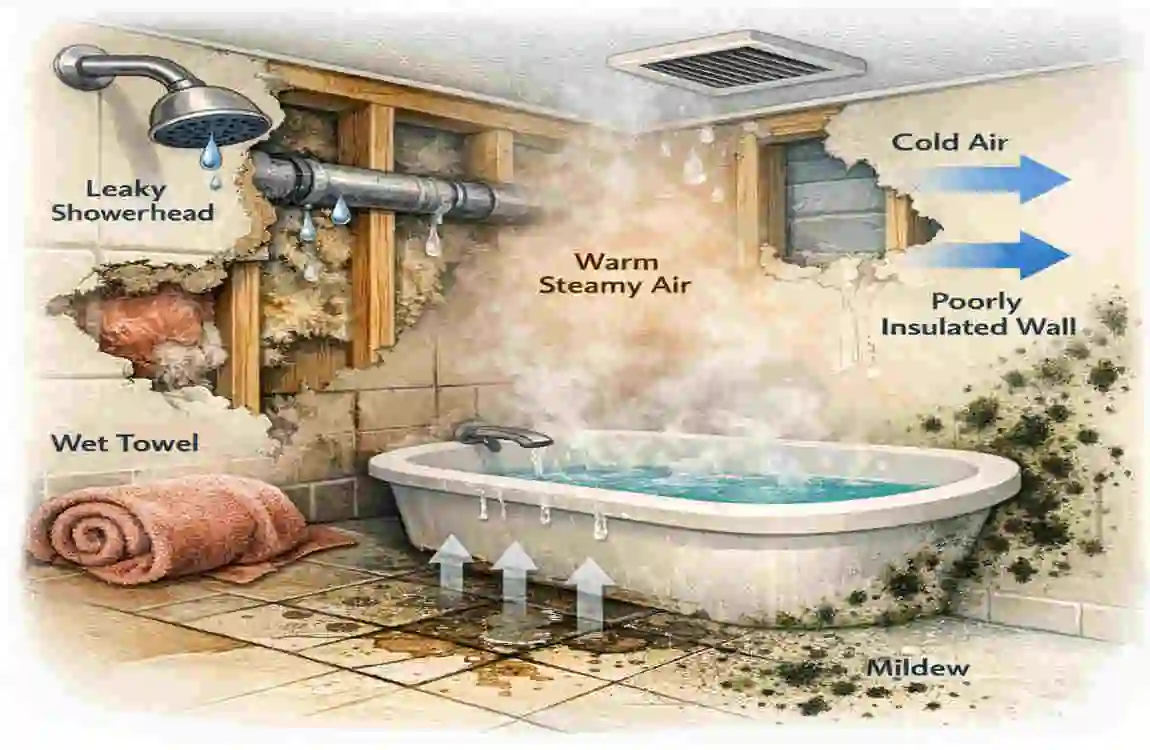
Moisture and Poor Ventilation
Bathrooms stay damp after showers, baths, and handwashing. If the room does not dry out well, mildew can grow on walls, corners, and ceilings.
Water Leaks and Condensation
Small leaks from pipes, sinks, or showers can keep a wall wet for a long time. Condensation from warm water can also accumulate on cool walls, creating the perfect environment for mildew.
Lack of Regular Cleaning
Dust, soap residue, and grime can help mildew stick and spread. Regular cleaning makes a big difference.
Signs of Mildew Growth
You may notice mildew if you see:
- Black, gray, or white patches on the wall
- A musty smell
- Peeling paint or wall discoloration
- Sneezing, irritation, or allergy symptoms
If you spot these early signs, clean them right away before they spread.
Safety Precautions Before Cleaning
Before you begin, keep these simple safety steps in mind:
- Wear gloves and, if needed, a mask
- Open a window or turn on the exhaust fan
- Never mix cleaning products, especially bleach with vinegar or ammonia
- Test any cleaner on a small hidden area first
Best Ways to Get Mildew Off Bathroom Walls
Cleaning MethodBest ForNotes
Vinegar Light mildew Safe and easy for most walls
Baking soda paste Small stubborn spots Gentle and budget-friendly
Hydrogen’s peroxide Medium mildew Works well without strong fumes
Bleach solution Heavy mildew Use carefully and only with good ventilation
Commercial cleaner Tough cases Good for larger or repeated growth
Vinegar Solution
Spray white vinegar directly on the mildew spot. Let it sit for 30 to 60 minutes, then scrub gently with a sponge or soft brush. Wipe the area clean with a damp cloth and dry it well.
This is one of the easiest and safest methods for light mildew.
Baking Soda Paste
Mix baking soda and water until it becomes a thick paste. Apply it to the mildew spot and let it sit for a few minutes. Then scrub lightly and wipe clean.
This method is helpful when the mildew is a little stubborn but not too severe.
Hydrogen‘s’s’s’s’s’s’s’s’s’s’s’s’s’s’s Peroxide
Use 3% Hydrogen‘s’s’s’s’s’s’s’s’s’s’s’s’s’s’s’s’s’s’s’s’s’s’s peroxide in a spray bottle. Spray it on the mildew, wait about 10 to 15 minutes, then wipe it away. Finish by drying the wall completely.
This is a good choice when you want a cleaner that works well without a strong smell.
Bleach Solution
For heavy mildew, a diluted bleach solution may help. Use it carefully, follow the label instructions, and make sure the room has plenty of fresh air.
Only use this on surfaces that can handle bleach. Always wear gloves and avoid overusing it.
Commercial Mildew Cleaner
If home methods do not work, a commercial mildew cleaner may be the better option. Choose one made for bathroom walls and follow the directions carefully.
Use this when the mildew keeps coming back or covers a larger area.
How to Prevent Mildew from Coming Back
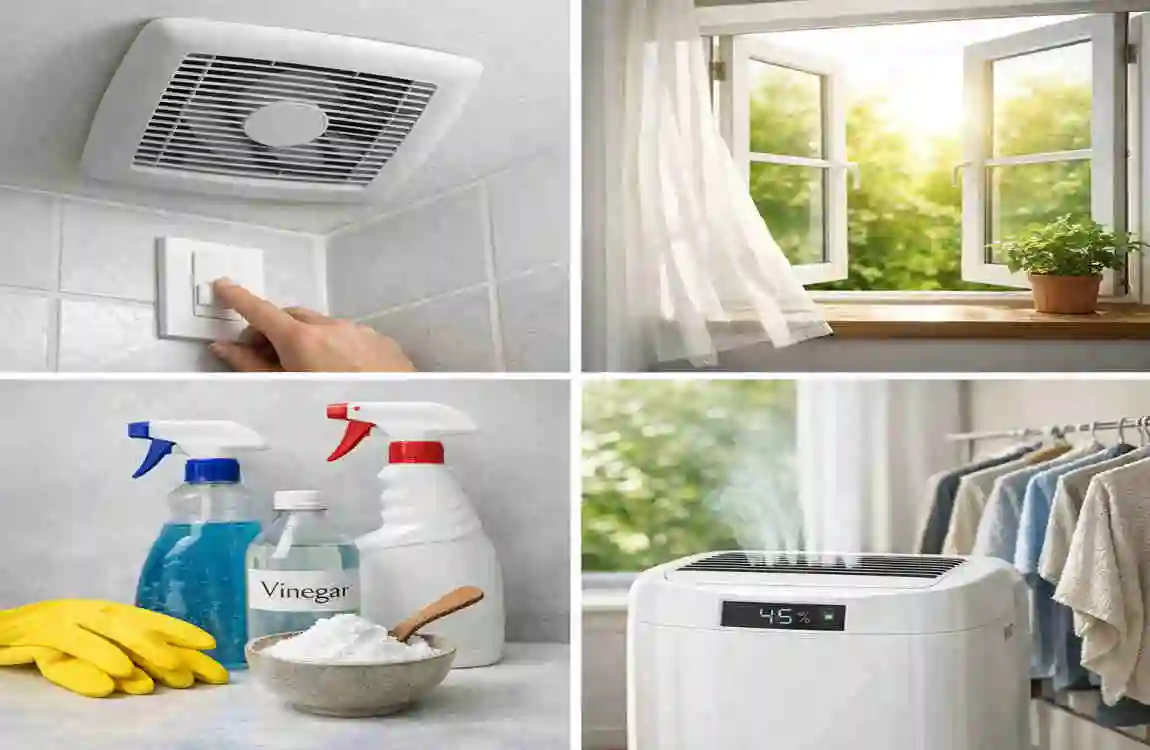
Cleaning is only part of the job. Prevention matters as much.
Keep the Bathroom Dry
After showers, wipe down wet walls and tiles. Do not let water sit for long periods.
Improve Airflow
Use the exhaust fan during and after showers. Open windows when possible so moisture can escape.
Fix Leaks Quickly
Even a small leak can lead to bigger mildew problems. Check under sinks, around tubs, and near pipes.
Clean Regularly
A quick weekly wipe-down can stop mildew before it starts. This is especially important in humid homes.
Use Mildew-Resistant Paint
If you are repainting, choose mildew-resistant paint for bathroom walls. It gives extra protection in damp areas.
Common Mistakes to Avoid
- Using too much water while cleaning
- Mixing bleach with other cleaners
- Waiting too long to treat small mildew spots
- Not drying the wall after cleaning
These mistakes can make the problem worse or bring the mildew back faster.
FAQ
What is the fastest way to remove mildew from bathroom walls?
Vinegar or Hydrogen‘s’s’s’s’s’s’s’s’s’s’s’s’s’s’s’s’s’s’s’s’s’s peroxide works fast for light mildew. For heavy buildup, bleach may work quicker.
Is mildew harmful?
Yes, mildew can cause allergy symptoms, irritation, and breathing discomfort in some people.
Can I paint over mildew?
No. You should remove the mildew first before painting, or it may grow back under the paint.
How often should I clean bathroom walls?
A weekly cleaning routine is a good way to prevent mildew, especially in humid bathrooms.
| Method | Solution | How to Use |
|---|---|---|
| Bleach Solution | 1 part bleach + 3 parts water | Apply, scrub, let sit 10 min, rinse thoroughly & dry |
| White Vinegar | Undiluted or 50/50 with water | Spray on mildew, let sit 1 hour (undiluted) or 5–10 min (diluted), scrub & rinse |
| Vinegar + Baking Soda Paste | Vinegar, lemon juice + baking soda | Scrub grout with paste, wait 5 min, rinse; repeat with hydrogen peroxide if needed |
| Commercial Cleaner | Lysol® Mold & Mildew Remover or similar | Spray, wipe; for tough stains let set 10 min before wiping |
| Natural Alternative | Tea tree oil diluted with water | Apply like bleach/vinegar, let sit 15–30 min, wipe & rinse |
