
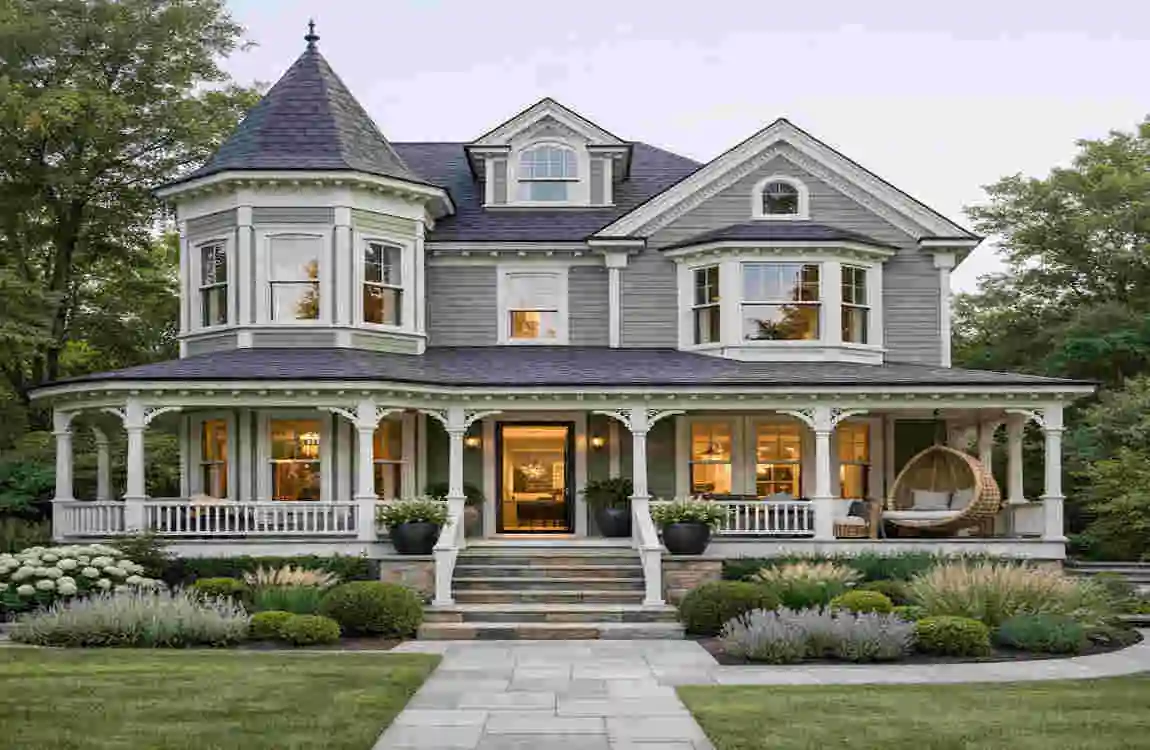
Imagine you are walking down a quiet, tree-lined street just as the sun begins to set. The sky is a bruised purple, and the streetlights are just starting to flicker to life. Suddenly, you spot it: a sage green Victorian house standing tall and proud. Its intricate woodwork catches the fading light, and the soft, earthy green of the siding seems to glow with a quiet, confident energy. It doesn’t scream for attention like a bright red or a deep navy might. Instead, it whispers of history, peace, and a very modern sense of style.
In 2026, this specific look is taking the world of home design by storm. If you have been scrolling through Pinterest lately, you’ve likely noticed a massive spike in interest—searches for sage green Victorian homes are up by over 40% this year alone. But why now? Why are we returning to a color that feels so rooted in the past?
The Allure of Sage Green in Victorian Architecture
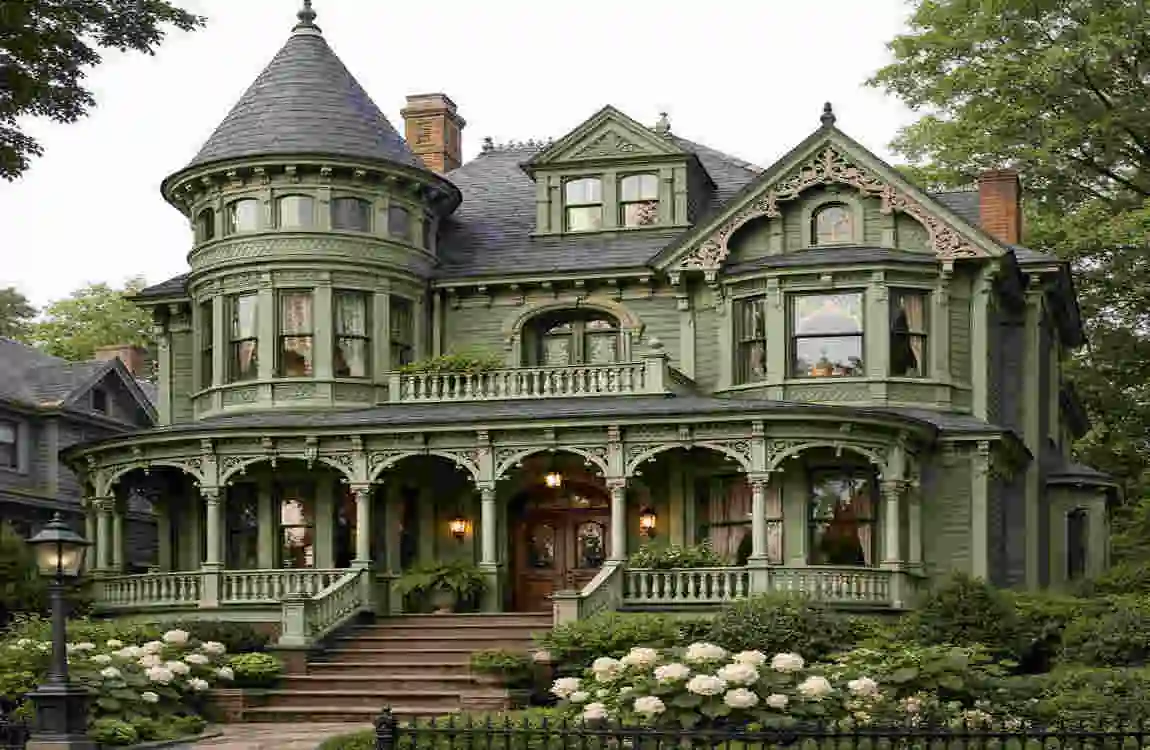
To understand why a sage green Victorian house feels so right, we first need to look at the color itself. Sage green isn’t just “green.” It is a sophisticated, muted blend of green and gray, often with a tiny hint of blue or yellow depending on the light. In technical terms, designers usually point to hex code #A7C4AE as a perfect baseline. It evokes the feeling of dried herbs, misty mornings, and forest floors.
What Makes Victorian Homes Unique?
Victorian architecture, which flourished between 1837 and 1901, is famous for being “extra.” These houses aren’t just boxes; they are canvases for art. Think about the ornate turrets, the “gingerbread” trim that looks like lace made of wood, and the sprawling wraparound porches.
During the height of the Victorian era, these homes were often painted in very dark, muddy colors or startlingly bright “polychrome” palettes. While those were beautiful in their time, they can feel heavy for today’s world. This is where sage green steps in. It respects the intricate millwork of the era without making the house feel like a museum piece.
The Psychology of the Color Sage
Why does looking at a sage green house make you feel like taking a deep breath? It’s actually backed by science. Color psychology suggests that muted greens act as a bridge between the indoors and the outdoors. This color mimics the effects of forest therapy, a practice known to lower cortisol levels and reduce stress.
When you apply this to a Victorian home—a structure that can sometimes feel imposing or “spooky” to some—the sage green softens the edges. It transforms a grand historical monument into a welcoming sanctuary. It tells the world that while you appreciate history, you also value peace.
A Visual Masterpiece in San Francisco
Think of the famous “Painted Ladies” in San Francisco. While many of them use bright pinks and yellows, the ones that truly stand out in 2026 are those using sage green palettes. The soft green body of the house allows the white or cream-colored trim to pop, highlighting the craftsmanship of the bay windows without overwhelming passersby.
Timeless Charm: Why Sage Green Revives Victorian Heritage
You might wonder if choosing sage green is a “trendy” move that you will regret in five years. The truth is, sage green is one of the most enduring colors in the history of design. It has deep roots in the British Gothic Revival and the Arts and Crafts movement, both of which drew inspiration from nature.
A Nod to the 19th Century
In the late 1800s, earthy tones were the gold standard. Architects like Andrew Jackson Downing argued that houses should blend into their natural surroundings. A sage green Victorian house does precisely that. It doesn’t fight against the trees in your yard; it joins them. By choosing this color, you are actually being more “historically accurate” than you might think, even if the finish feels modern.
Enhancing Architectural Features
One of the best things about sage green is how it handles shadows because Victorian homes have so many layers—shingles, siding, brackets, and cornices—the way light hits the house changes throughout the day.
Sage green is a “chameleon” color. In the bright midday sun, it looks crisp and clean home. As evening falls, it deepens and becomes more mysterious. This highlights architectural features like bay windows and wraparound porches in a way that flat colors cannot. It gives the house “soul.”
The Practical Benefits of Sage
Aside from looking beautiful, there are several practical reasons to choose this palette. Let’s look at why homeowners are making the switch:
- Hiding the Elements: Unlike a stark white house, sage green is incredibly forgiving. It hides dust, pollen, and light dirt much better, meaning you won’t feel the need to power wash it every single month.
- Natural Pairing: It looks incredible next to natural materials. If your Victorian house has a stone foundation or a wooden front door, sage green will make those materials look richer.
- Market Value: According to recent Zillow data, homes with “earthy neutral” exteriors can see a 5-7% lift in home value. Buyers in 2026 are looking for “turn-key serenity,” and a sage green exterior signals exactly that.
Modern Serenity: Sage Green as a 2026 Wellness Trend
We live in a fast-paced, digital world. Because of this, our homes have become more than just places to sleep; they are our wellness retreats. The “Modern Serenity” trend is all about creating an environment that helps you decompress the moment you pull into the driveway.
Biophilic Design and Mindfulness
You have likely heard of biophilic design. This is the practice of connecting our living spaces with nature to improve our health. Painting your Victorian house sage green is a form of biophilic design on a grand scale. It breaks down the barrier between your garden and your walls.
In 2026, major paint brands like Pantone and Benjamin Moore are leaning heavily into “healing hues.” Sage green is at the top of that list. It represents growth, renewal, and stability—things we all crave in the modern age.
The Modern Twist: Matte Finishes
While traditional Victorian homes often had a bit of a sheen to their paint, the modern trend is moving toward matte or eggshell finishes. A matte sage green Victorian house looks velvety and high-end. It absorbs light rather than reflecting it, giving the color more depth and preventing it from looking like “plastic” siding.
Comparing the Old and the New
To give you a better idea of how sage green stacks up against traditional Victorian choices, take a look at this table:
Feature: Traditional Victorian Colors, Sage Green Victorian House
Vibe Bold, dramatic, and formal Serene, approachable, and organic
Maintenance High (darker colors fade faster in UV) Low (muted tones are UV-resistant)
Resale Appeal Niche (appeals to history buffs) Broad (appeals to all generations)
Visual Impact Dominates the landscape. Complements the landscape
Interior Flow Often feels disconnected. Easy to transition into modern interiors
Design Inspirations and Color Pairings
Choosing the primary color is just the first step. The real magic of a sage green Victorian house happens when you start picking your accent colors. Because Victorian homes have so many “layers,” you usually need at least three colors: the body, the trim, and the “punch” color (for the door or small details).
Classic and Crisp
For a look that will never go out of style, pair your sage green body with crisp white or cream trim. This creates a sharp contrast that makes the “gingerbread” details of the house pop. For the front door, consider a deep charcoal or even a soft black. This keeps the look grounded and sophisticated.
Bold and Earthy
If you want something a bit more adventurous, try pairing sage with terracotta or burnt orange accents. These colors are opposites on the color wheel, which means they make each other look more vibrant. You could use terracotta for the window sashes or the porch floor. This creates a warm, Mediterranean-meets-Victorian vibe that feels very high-end.
The Minimalist Approach
For a truly modern take, go for a monochromatic or tonal look. Use a medium sage for the body, a very light “seafoam” sage for the trim, and a deep “forest” sage for the shutters. This “layered green” look is incredibly soothing and makes the house look like it grew right out of the ground.
Extending the Flow Indoors
Don’t stop at the front door! The best homes have a sense of “flow.” You can bring that sage green Victorian house vibe inside by using similar tones in your entryway or kitchen.
- Sage Green Cabinets: These are a massive trend in 2026.
- Accent Walls: A sage green wall in a room with high Victorian ceilings and white crown molding looks absolutely stunning.
Step-by-Step Guide: Painting Your Sage Green Victorian House
Ready to take the plunge? Painting a Victorian home is a big job, but it is also one of the most rewarding DIY or professional projects you can undertake. Because these houses are so detailed, you can’t just “slap on a coat of paint” and hope for the best. You need a plan.
The Preparation
Before you even open a can of paint, you must check the health of your siding. Victorian homes are often made of wood, which can rot or peel over time.
- Inspect the Wood: Look for soft spots or cracks.
- Power Wash: Gently clean the exterior to remove years of dust and cobwebs. Be careful not to use too much pressure, as old wood can be fragile.
- Scrape and Sand: You need a smooth surface for the paint to bond to. This is the most boring part, but it’s the most important!
Choosing the Right Paint
Not all sage greens are created equal. You want a high-quality exterior paint that can withstand sun and rain.
- Top Recommendations: Look at “October Mist” by Benjamin Moore or “French Gray” by Farrow & Ball. These colors have the perfect balance of green and gray.
- Sample First: Paint a 3×3-foot square on different sides of your house. Look at it in the morning, noon, and evening. You’ll be surprised how much the color changes!
The Application Process
If you are doing this yourself, follow these steps to ensure a professional finish:
- Prime Everything: Use a high-quality primer, especially on ornate details. This prevents “tannin bleed” from old wood.
- The “Body” First: Use a sprayer on the large, flat areas of the siding to achieve an even coat.
- The “Trim” Second: This requires a steady hand and a high-quality brush. Take your time with the brackets and cornices.
- Two Coats is a Must: Never settle for one coat. Two coats provide the depth and durability needed for a Victorian home.
Cost and Timeline
How much should you budget? For a standard 2,000-square-foot Victorian home, a professional job will likely cost between $5,000 and $15,000. If you are doing it yourself, you might spend $1,500 to $3,000 on high-end paint and supplies. Expect the project to take 1-2 weeks, depending on the weather and the complexity of your trim.
Real-Life Transformations: Stories from the Field
Nothing proves the power of a sage green Victorian house like a good before-and-after story. I recently spoke with a homeowner named Sarah who renovated a 1890s Victorian in Portland.
“The house was originally a faded, peeling yellow,” Sarah told me. “It felt tired and out of place. We decided on a soft sage green with ‘Swiss Coffee’ white trim. The transformation was instant. Neighbors we had never met started stopping by to tell us how much they loved the color. It felt like the house finally took a deep breath and relaxed.”
Another homeowner, Mark, found that his sage-green paint actually helped reduce his energy bills. “We used a modern reflective paint in a sage tone. Because it’s a lighter, more natural color than the dark brown we had before, the house stays noticeably cooler in the summer. We saw about a 15% drop in our cooling costs.”
Maintenance and Longevity Tips
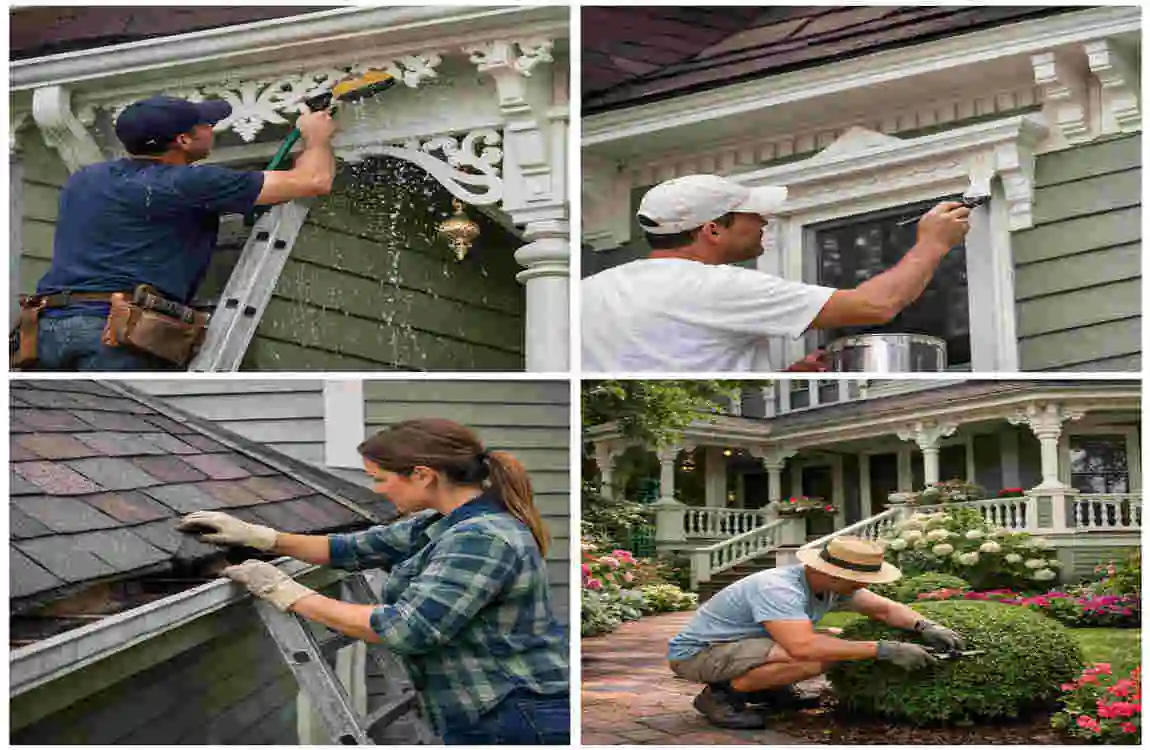
Once your house is looking beautiful, you want it to stay that way. Victorian homes require a bit of “TLC,” but it doesn’t have to be a chore.
- The Annual Soft Wash: Once a year, use a garden hose and a soft-bristled brush to wash the siding. This prevents mold and mildew from taking hold in the intricate carvings.
- Touch-Up Kit: Keep a small jar of your body and trim paint in the garage. If you see a small chip or scratch, fix it immediately to prevent moisture from getting into the wood.
- Eco-Friendly Choices: In 2026, many homeowners are opting for “Low-VOC” or lime-based paints. These are better for the environment and allow the old wood in a Victorian home to “breathe,” helping prevent rot.
Frequently Asked Questions
What is the best sage green paint for a Victorian house? While it depends on your local light, “October Mist” by Benjamin Moore and “Saybrook Sage” are top-tier choices. For a more historic, muted look, “French Gray” by Farrow & Ball is a designer favorite.
Does painting my Victorian house sage green increase its value? Yes! Data shows that earthy, neutral tones like sage green are beautiful to modern buyers, potentially increasing home value by 5-7% compared to outdated or overly bold colors.
How do I pair a sage green Victorian house with landscaping? Sage green looks incredible with “cool” toned plants. Think lavender, white roses, and ornamental grasses. The purple of the lavender creates a beautiful, natural contrast with the green siding.
Is sage green hard to maintain? Not at all. In fact, it is easier to maintain than white or dark colors because it hides dust and organic growth (like pollen) much better.
Can I use sage green on a brick Victorian? Absolutely. If your Victorian has a mix of brick and siding, sage green acts as an excellent bridge color that complements the red or orange tones of the brick.
