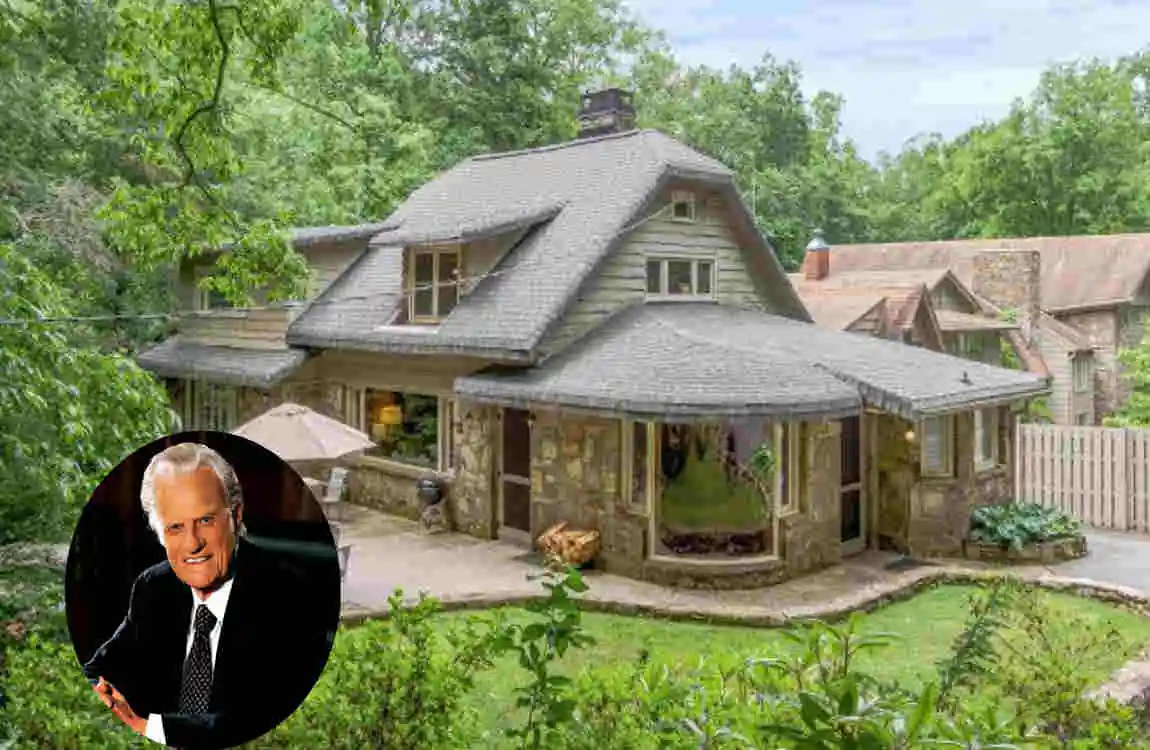
The Billy Graham house remains interesting not because it was an extravagant celebrity mansion, but because it was connected to the private life of one of America’s most influential evangelists. Billy Graham spent much of his later life in North Carolina, where his home provided a quieter setting away from the huge crowds and international attention surrounding his ministry.
Graham became famous for preaching to millions worldwide. Yet his home represented a very different part of his life. It was a place for family, rest, reading, prayer, and everyday living.
For anyone interested in historic homes, the property offers an important lesson: a home’s significance does not always come from its size or luxury. Sometimes its greatest value comes from the person, family, and history connected to it.
| Personal Information | Details |
|---|---|
| Full Name | William Franklin “Billy” Graham Jr. |
| Born | November 7, 1918 |
| Birthplace | Charlotte, North Carolina, USA |
| Died | February 21, 2018 |
| Age at Death | 99 |
| Profession | Evangelist, preacher, author |
| Wife | Ruth McCue Bell Graham (married 1943; died 2007) |
| Children | Virginia “Gigi,” Anne, Ruth, Franklin, and Nelson |
| Grandchildren | 19 |
| Education | Florida Bible Institute; Wheaton College |
| Ministry Organization | Billy Graham Evangelistic Association |
| Ministry Reach | Nearly 215 million people in more than 185 countries and territories through live evangelistic events |
| Last Residence | Montreat, western North Carolina |
History of Billy Graham’s House
Early History of the Property
Billy Graham and his family were closely associated with the North Carolina area for many years. Graham’s long relationship with the region became an important part of his personal story.
His home was not designed primarily as a public attraction. It functioned as a private residence where Graham could live away from the intense demands of his international ministry.
Because private residential records can be incomplete or intentionally kept confidential, it is important not to present uncertain details about ownership, renovations, or exact property history as facts.
Billy Graham’s Family Life
The home was closely connected with Graham’s family life.
Graham and his wife, Ruth Bell Graham, raised their children while he continued his demanding ministry. A private residence gave the family a place to spend time together despite the constant travel and public attention surrounding Graham.
This part of the story is particularly valuable for understanding the person behind the public image.
The home represented ordinary moments, very different from the large stadiums and evangelistic events where Graham was usually seen.
A Quieter Side of Graham
Famous people often become associated with impressive buildings and luxury properties. Graham’s residential story offers a different perspective.
People remember his home mainly for the life lived there, not for its extreme wealth.
That makes the property especially relevant to readers interested in historic residential architecture and the personal stories behind famous homes.
Architecture and Design of Billy Graham House
Exterior Design
The Billy Graham residence is best understood as a traditional private home within a peaceful natural setting, rather than as a grand celebrity estate.
Its residential character reflects the importance of privacy and comfort.
The surrounding landscape is also an important part of the experience. North Carolina’s natural environment provides a very different atmosphere from the urban settings associated with many modern celebrity homes.
Interior Design
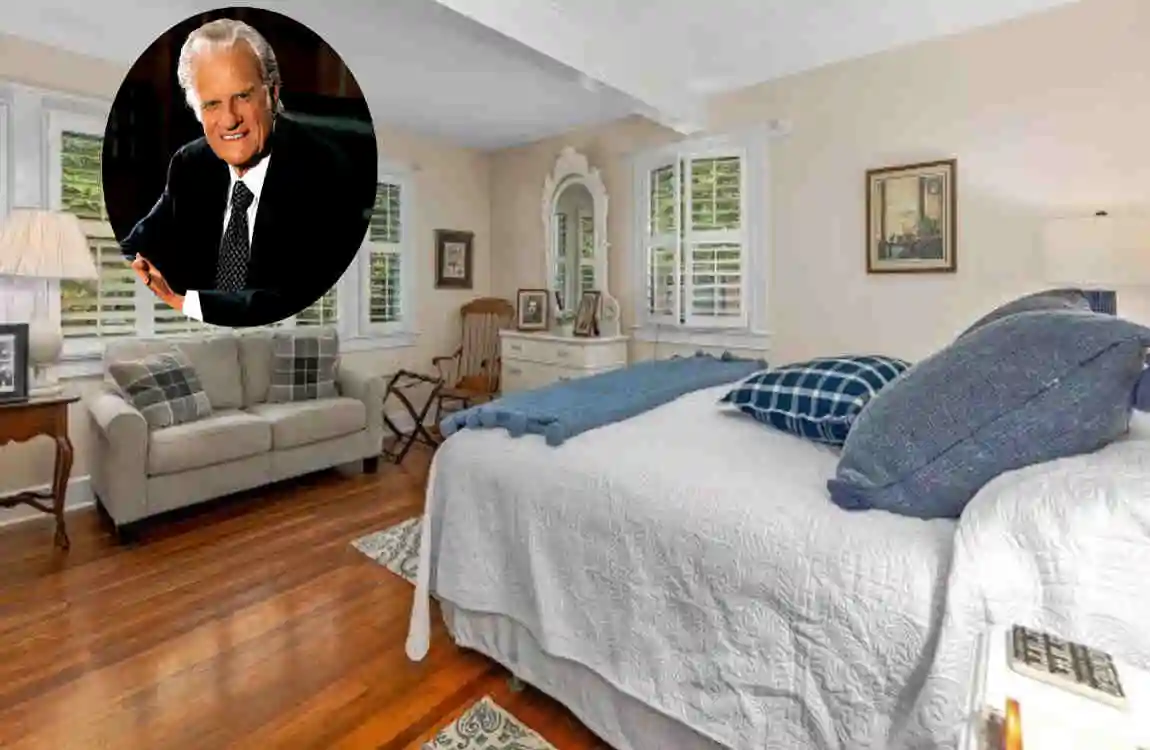
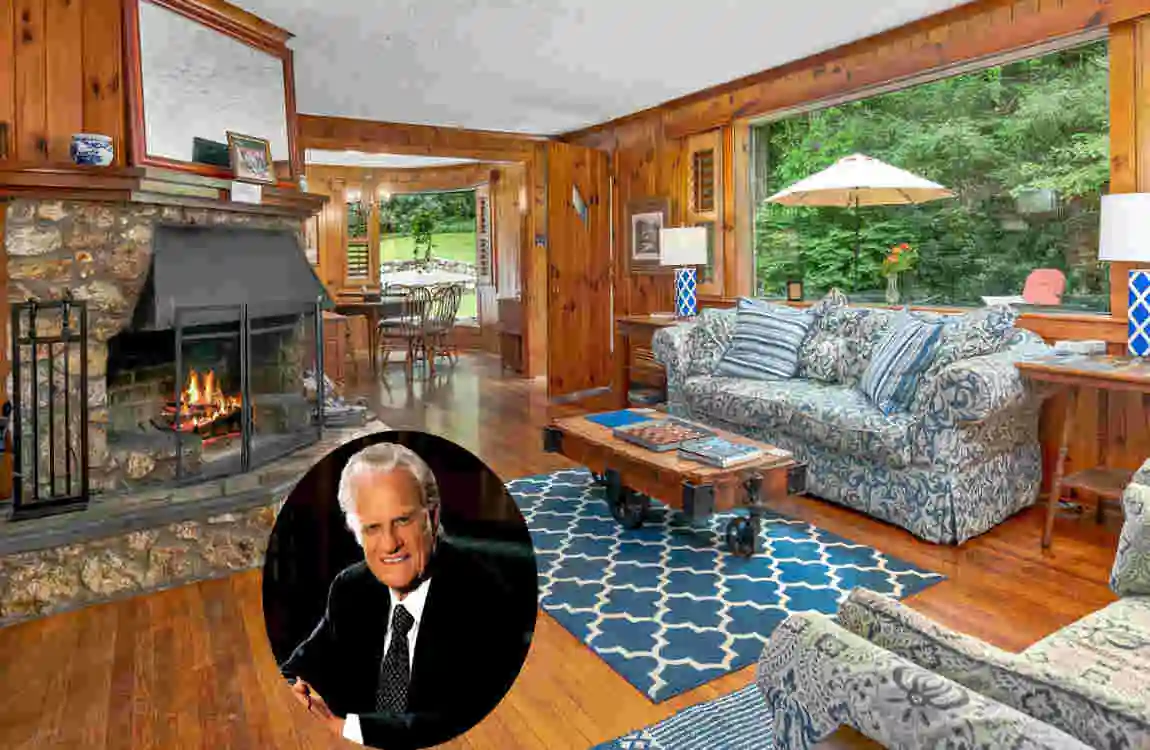
Detailed public information about every room and interior finish is limited. For that reason, inventing specific materials, room dimensions, or decorative features would be misleading.
From the home’s role, we can infer that it served practical purposes.
The residence needed to accommodate family life, personal activities, rest, and Graham’s continued work.
A home connected with someone who spent so much time traveling also needed to provide a sense of stability.
Work and Study Areas
Graham was a prolific writer and speaker, so private spaces for work and reading were naturally important to his lifestyle.
His career involved preparing sermons, writing books, studying religious material, and corresponding with people around the world.
A residential workspace would have allowed him to continue these activities in a quieter environment.
Home Layout and Natural Setting
The relationship between the home and its surroundings is one of its most appealing characteristics.
Rather than treating the landscape as an afterthought, the residential setting offered privacy and a peaceful atmosphere.
For modern homeowners, this offers a useful design lesson: a comfortable home doesn’t need complicated architecture when the surrounding environment already provides beauty.
Location, Setting & Property Character
Billy Graham’s home is in Montreat, North Carolina, a small mountain community known for its natural surroundings and peaceful residential atmosphere.
The area differs greatly from the busy urban environments where many public figures live.
A Peaceful Mountain Environment
Montreat’s mountain landscape provided a fitting setting for someone who spent much of his life traveling.
Trees, hills, and a quieter residential atmosphere helped create separation from Graham’s demanding public career.
For someone constantly surrounded by crowds, a peaceful home environment could provide valuable personal space.
Privacy and Residential Character
Privacy was especially important for a person as recognizable as Billy Graham.
His home was not simply real estate. It was also a private family environment.
This distinction matters when researching famous residences. A historic connection does not mean every part of a private property should be treated as public information.
For that reason, avoid exact private addresses and sensitive residential details.
Why the Setting Matters
The location adds to the residence‘s historical character.
The home was connected to a mountain community rather than a glamorous luxury district. Its setting reinforces the idea that Graham’s private lifestyle was considerably quieter than his public career.
Billy Graham House and His Legacy
A Home Connected to His Ministry
Billy Graham’s ministry reached audiences worldwide.
His home, however, represented the personal side of that extraordinary career.
The residence gave him a place to return to after traveling, spend time with family, read, write, and rest.
This makes the home an interesting part of his larger biography.
Faith and Simplicity
Graham’s public image was strongly connected to Christian faith, humility, and service. His residential story is often discussed in that broader context.
The home matters less for luxury than for its connection to his values and family life.
For readers interested in residential design, this is a useful reminder that good home design is not always about impressing outsiders.
A successful home can provide comfort, privacy, functionality, and a connection to its surroundings.
Historical and Cultural Significance
The property has historical interest because of its connection to one of America’s most recognizable religious figures.
A celebrity home attracts attention because of expensive finishes. In contrast, a historic home attracts attention because of the life associated with it.
The Billy Graham residence belongs more strongly to the second category.
Home as Part of a Larger Story
A historic residence can help people understand an individual’s life more personally.
Photographs, books, speeches, and biographies show what a person accomplished. A home can show where that person rested, worked, and lived everyday life.
That is why famous residences can become important cultural landmarks even when they are not architecturally spectacular.
What Happened to Billy Graham’s House?
Questions about the current status of a famous person’s former residence can be difficult to answer because private homes may change ownership or remain inaccessible to the public.
The same principle applies to the Billy Graham house.
Private Residence vs. Public Attraction
It is important to distinguish Graham’s former residence from places specifically created as public museums or visitor attractions.
The Billy Graham Library in Charlotte, North Carolina, for example, is a public destination connected to his life and ministry. It should not be confused with his private residence.
A private home does not automatically become a museum simply because a famous person lived there.
Preservation and Historical Interest
Historic interest can remain even when a property is privately owned.
Researchers, historians, architecture enthusiasts, and fans may continue to study the residence because of its connection with Graham.
At the same time, current residents deserve privacy.
What Visitors Can Expect
Visitors should not assume that they can enter or tour a former private residence.
If a property is not officially operated as a museum or public historic site, access may be restricted.
This is especially important when researching homes belonging to famous individuals. You can discuss publicly available historical information without revealing private residential details.
Why Billy Graham House Still Matters Today
The Billy Graham house remains relevant because it connects architecture with personal history.
Its importance does not depend on being the largest or most expensive home in North Carolina. Instead, its significance comes from the life lived there.
A Lesson in Simple Residential Design
One of the strongest lessons from Graham’s residential story is that a meaningful home does not need to look like a luxury resort.
A comfortable residence can focus on:
- Privacy and peaceful surroundings
- Functional family spaces
- Natural light and views
- Comfort rather than excessive decoration
- A strong connection with the landscape
These ideas still resonate with homeowners today.
A Home That Preserves Personal History
Historic homes often preserve stories that statistics cannot capture.
The Billy Graham residence reminds us that architecture is also about people.
A house becomes memorable when important moments happen inside it. Family conversations, writing, planning, prayer, rest, and everyday routines can all become part of a home’s history.
Why Readers Still Search for Billy Graham House
Interest in the property continues because Graham’s influence remains significant.
People researching his life naturally want to understand where he lived and what his personal environment was like.
For real-estate and architecture readers, the property offers another perspective on famous homes: historical value can matter more than luxury value.
FAQ About Billy Graham House
Where was Billy Graham’s house located?
Billy Graham’s home was associated with Montreat, North Carolina, a peaceful mountain community. Exact private residential details should not be shared.
What did Billy Graham’s house look like?
The residence is generally understood as a comfortable, traditional private home rather than an extravagant celebrity mansion. Its natural surroundings were an important part of its character.
Did Billy Graham live in the house for many years?
Graham maintained a long connection with the Montreat area and spent significant periods of his later life there. His home provided a private setting for family life and work.
Is Billy Graham’s house open to the public?
A former private residence should not be confused with a museum or public attraction. Visitors should not assume that the private property is open for tours.
What made Billy Graham’s house historically important?
Its importance comes primarily from its connection to Billy Graham’s personal life, family, and ministry. It provides a residential context for understanding the person behind his public career.
What architectural style was Billy Graham’s house?
The property is best described broadly as a traditional residential home in a mountain setting. Use more specific architectural labels cautiously unless reliable documentation supports them.
| House / Property | Location | Size | Bedrooms / Baths | Architecture & Design | Historical Significance | Known Value / Price |
|---|---|---|---|---|---|---|
| Montreat Family Cottage – 198 Mississippi Road | Montreat, North Carolina | 2,564 sq. ft. | 4 / 2 | Two-story mountain cottage, honey-toned shiplap siding, stone fireplace, built-in shelving, large forest-facing windows and rustic interiors | Billy and Ruth Graham purchased it in the late 1940s and raised their children there during the early, important years of Graham’s ministry. | Listed for $599,000 in 2021; this was a listing price, not a current appraisal. |
| Little Piney Cove / Graham Mountaintop Home | Montreat, North Carolina | 2,500+ sq. ft. reported by current preservation project | Not reliably published | Rustic mountain-home design, timber/log construction, surrounded by forest and mountain scenery | Ruth Graham arranged for the family to build the home after their earlier residence attracted too many visitors. It became the Graham family’s long-term mountain retreat. | No reliable current market value publicly established |
| Graham Childhood Homeplace | Originally the Graham dairy farm; now at the Billy Graham Library, Charlotte, NC | Approx. 2,400 sq. ft. | Originally 4 bedrooms / 2 baths | Brick Colonial family farmhouse with traditional design | Billy Graham lived there from about age 9 until college. The historic house was later moved from the family farm to the Billy Graham Library campus. | Originally cost about $9,000 to build; no meaningful modern market value because it is a historic museum property. |
Where Does Billy Graham Currently Live?
Billy Graham does not currently live anywhere. He passed away on February 21, 2018, at age 99, at his home in Montreat, North Carolina.
Billy Graham House Photos