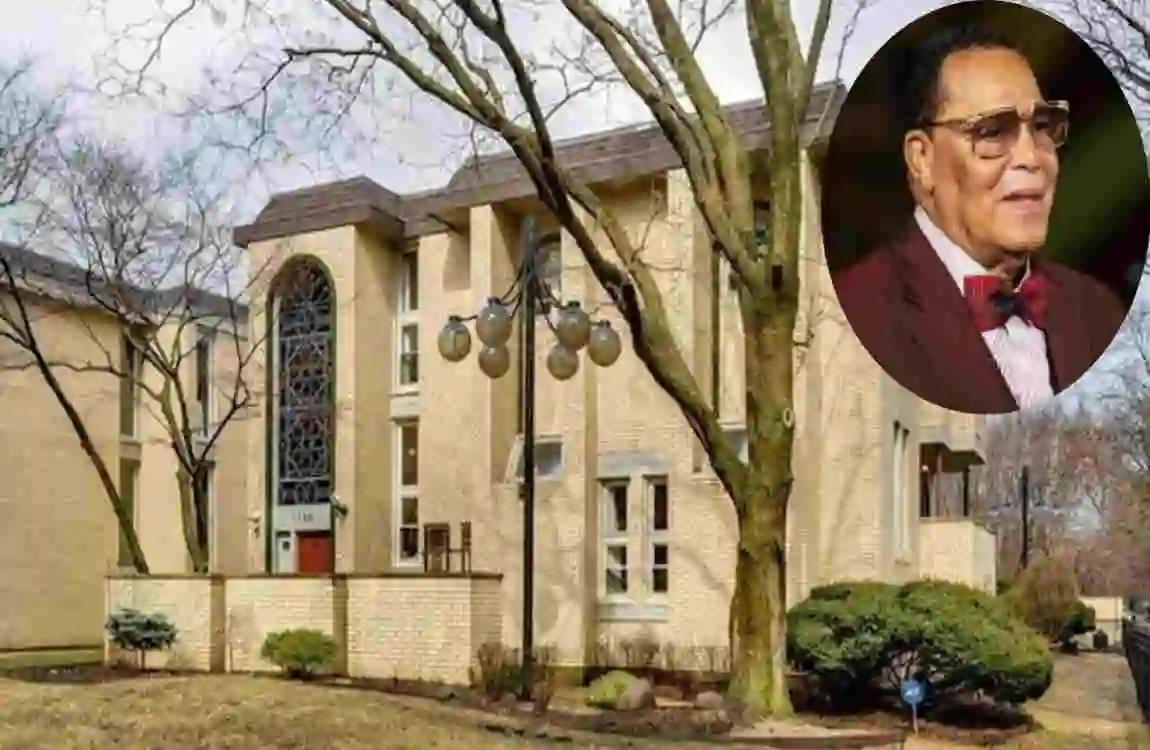
When you think of historic landmarks in Chicago, your mind might jump to the Willis Tower or the Bean. But tucked away in the historic Bronzeville neighborhood stands a residence that is as culturally significant as it is architecturally stunning. We are talking about the Louis Farrakhan house. This property serves not just as a home, but as a fortress of history, a community hub, and a symbol of resilience for the Nation of Islam (NOI).
Imagine walking down a tree-lined street and coming face-to-face with a grand, red-brick Victorian mansion. The white porch gleams in the sunlight, and the structure itself seems to hum with stories of the past century. This isn’t just any house; it is the personal residence of Minister Louis Farrakhan, a figure who has shaped the landscape of African American leadership for decades.
History of the Mansion: A Bronzeville Jewel
Now, let’s turn our attention to the bricks and mortar. The Louis Farrakhan house isn’t a modern build; it is a piece of living history that dates back to the Gilded Age.
Construction and Early Years
The house was built in 1892, a time when Chicago was rapidly expanding and establishing itself as a world-class city. This was the era of the World’s Columbian Exposition, and the architecture of the time reflected a desire for grandeur and permanence.
Located in Bronzeville, the area was once known as the “Black Metropolis.” In the early 20th century, this neighborhood was the heartbeat of African American culture, business, and jazz in the Midwest. The mansion itself is a stunning example of Victorian architecture, designed to impress.
Initially, homes like these were built for Chicago’s wealthy elite. They featured high ceilings, intricate woodwork, and spacious parlors meant for entertaining. Over the decades, as the demographics of the neighborhood shifted, the house stood witness to the Great Migration, the Civil Rights Movement, and the changing tides of the city. It is a survivor, much like the community that surrounds it.
Farrakhan’s Acquisition
So, how did this Victorian gem become the Nation of Islam residence?
Louis Farrakhan purchased the property in 1971. At the time, the Nation of Islam was consolidating its power and influence in Chicago. The purchase wasn’t just a real estate transaction; it was a statement. By reclaiming a historic mansion in the heart of the Black community, Farrakhan was planting a flag.
Since 1981, when Farrakhan fully assumed leadership of the revived NOI, the house has evolved. It has served as a venue for private meetings with world leaders, celebrities, and activists. It has been involved in planning significant initiatives and has served asserved as a quiet refuge away from the media spotlight.
To give you a clearer picture of the home’s journey, here is a timeline of its ownership and significance:
YearEventSignificance
1892 Construction Built as a Victorian landmark during Chicago’s Gilded Age.
1971 Purchase: Louis Farrakhan purchases the home, establishing roots in Bronzeville.
1981 NOI Revival: The house becomes a key hub as Farrakhan rebuilds the Nation of Islam.
1995 Million Man March: Strategic planning for the historic march likely took place within these walls.
2020s Living Museum The home continues to serve as a residence and a cultural site for visitors.
Architectural Features: Victorian Charm Meets NOI Discipline
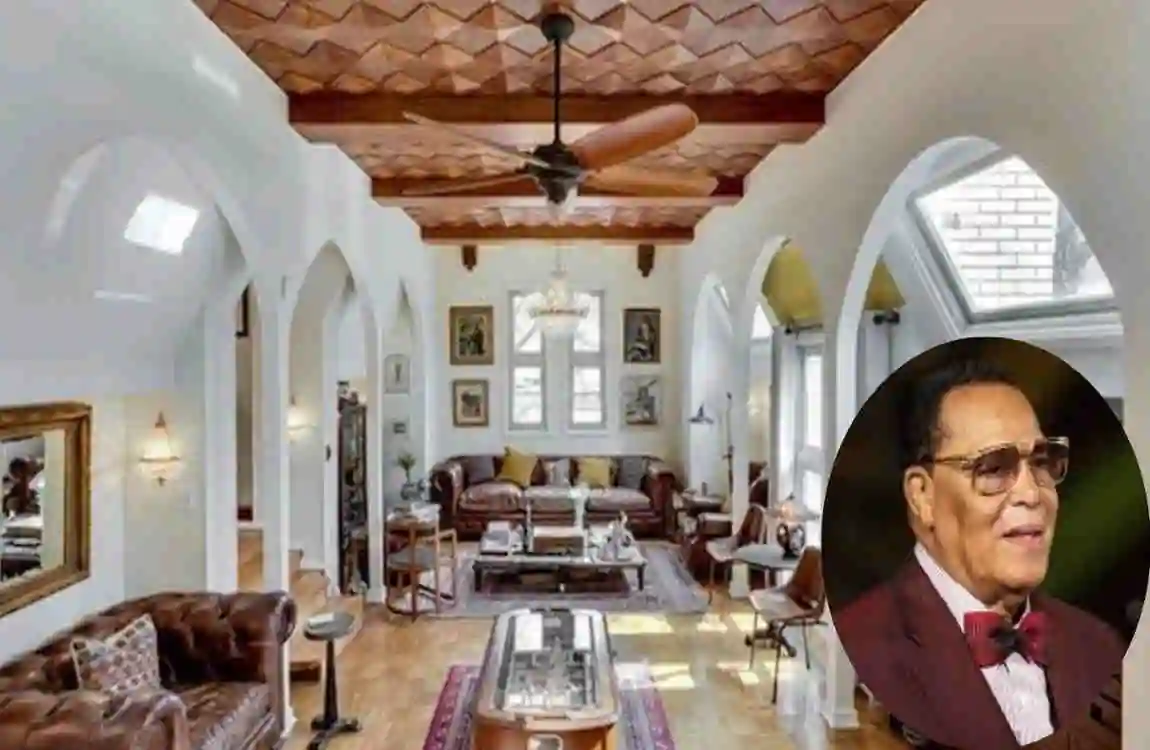
You might be wondering, “What does the place actually look like?” Let’s break down the architectural details that make the Louis Farrakhan house such a standout property in Chicago.
Exterior Design
The first thing that catches your eye is the red-brick façade. It is imposing yet inviting, a classic hallmark of late 19th-century Chicago architecture. The brickwork has been meticulously maintained, showcasing the craftsmanship of a bygone era.
Contrasting beautifully with the red brick is the expansive white porch. In Victorian homes, the porch was a social space—a place to see and be seen. For Farrakhan, it serves as a podium of sorts, a transitional space between the public street and the private sanctuary.
The house features two stories (plus likely an attic and a basement), with large, symmetrical windows that let light flood the interior. The roofline likely features the steep pitches typical of Victorian designs, perhaps with dormer windows that add character to the silhouette. It fits perfectly into the architectural tapestry of Bronzeville, a neighborhood known for its historic greystones and mansions.
Interior Highlights
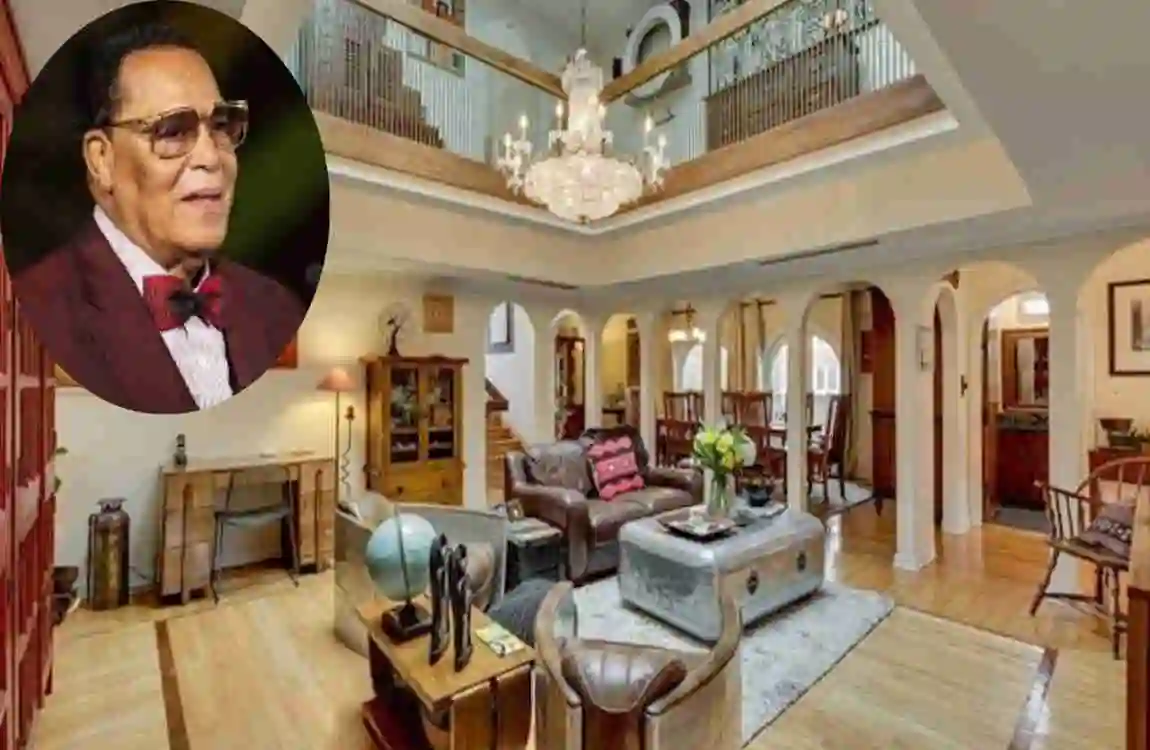
While few of us will ever get a private tour, we can make some educated guesses about the interior based on the home’s history and the Nation of Islam’s aesthetic principles.
Victorian homes are known for their grand entryways and staircases, and this mansion is likely no exception. Expect to find rich wood paneling, perhaps mahogany or oak, which was standard for 1892 luxury builds.
However, the decor likely reflects the NOI’s values: modesty, discipline, and cleanliness. You wouldn’t expect ostentatious displays of wealth; instead, a “modest luxury.” Think Persian rugs, Islamic calligraphy, and motifs adorning the walls, and a layout that facilitates both family life and religious gatherings.
The house is also evolving into a sort of museum. Over the decades, it has filled with artifacts from Farrakhan’s career—gifts from foreign dignitaries, photos from the Civil Rights era, and perhaps even memorabilia from his calypso days. It is a living archive of Black history.
Cultural and Community Role: More Than Just a House
A house is just a building until people give it meaning. The Louis Farrakhan house carries a weight that goes far beyond its property value.
NOI Headquarters Tie-In
It is important to note that this house operates in tandem with Mosque Maryam, the National Center of the Nation of Islam, which is located nearby. While the Mosque is the public face of the organization—the place for worship and large sermons—the house is the private heart.
Think of it as the difference between the Oval Office and the White House residence. The Farrakhan Chicago mansion is where intimate conversations take place. It is where strategies are developed before they are presented to the public.
During major NOI events, such as Saviours’ Day, the house often becomes a hive of activity. It serves as a reception space for VIPs and a gathering spot for the inner circle of the movement’s leadership.
Symbol of Empowerment
For the residents of Bronzeville and the broader African American community, the house is a symbol of aspirational success. In a country where Black ownership of prime real estate has historically been challenged, seeing a Black leader maintain a historic mansion in a historic Black neighborhood is powerful.
It represents resilience. The house has stood through economic downturns and urban decay, only to emerge as a well-preserved landmark. It draws tourists, history buffs, and followers of the NOI who want to see the place where history was made. It anchors the neighborhood, reminding everyone of Bronzeville’s rich legacy as a center of Black culture.
Inside Look and Daily Life
What is it like to actually live there? While Minister Farrakhan is a public figure, he is notoriously private about his family life. However, we can piece together a picture of daily life inside the Farrakhan residence.
Residence Layout
The layout of a Victorian mansion is surprisingly well-suited for a leader like Farrakhan. These homes were built with distinct zones.
- The Public Zone: The ground floor likely features a parlor, a formal dining room, and a library. This is where meetings are held, and guests are entertained.
- The Private Zone: The upper floors would contain the bedrooms and family quarters. This separation allows Farrakhan to maintain a family life with his wife, Khadijah Farrakhan, and their children and grandchildren, away from the Nation’s business.
- The Office: Every leader needs a command center. It is safe to assume there is a dedicated home office, lined with books and secure communications, where the Minister works on his speeches and correspondence.
Personal Touches
One of the most fascinating aspects of Louis Farrakhan is his love for the violin. He is an accomplished classical violinist, a passion he revived later in life.
Inside the house, there is likely a music room or a dedicated practice space. Imagine the sound of a violin concerto echoing through the halls of this 19th-century mansion—it adds a layer of humanity and artistry to the leader’s stern public image.
Security is, of course, a significant factor. Given the controversies and threats he has faced over the years, the house is undoubtedly equipped with high-level security measures. Yet, the goal has always been to maintain the home’s dignity without turning it into a bunker. It remains a home first and foremost.
Visiting and Legacy
Are you interested in seeing the Louis Farrakhan house for yourself? Here is what you need to know.
Public Access
Currently, the home is a private residence, not a public museum where you can buy a ticket and walk in. You cannot simply knock on the room door. However, it is a popular stop for Chicago history tours and Bronzeville heritage trails.
Visitors often stop on the sidewalk to admire the architecture and take photos of the exterior. If you plan to visit, remember to be respectful. It is located in the Kenwood/Bronzeville area. The neighbors are used to the attention, but it is essential to maintain a respectful distance and keep noise levels down.
Occasionally, the NOI may open parts of the property or host events on the grounds for specific community celebrations, but these are generally by invitation or for the congregation.
Enduring Impact
As Louis Farrakhan ages, questions about the future of the house naturally arise. Will it remain a residence for the next NOI leader? Will it be converted into a full-fledged museum dedicated to the history of the Nation of Islam?
Whatever the future holds, the luxury house is already cemented as a historic icon. It stands as a physical chapter in the story of Chicago, the Nation of Islam, and the broader African American experience in the 20th and 21st centuries.
Frequently Asked Questions (FAQ)
1. Where is the Louis Farrakhan house located? The house is located in the Kenwood/Bronzeville neighborhood on the South Side of Chicago. It is a historic area known for its significant African American heritage.
2. Is the Louis Farrakhan house open to the public for tours? Generally, no. It is a private residence. However, the exterior is a popular site for tourists and those on historical tours of Chicago. There have been discussions about it serving museum-like functions in the future, but access is currently restricted.
3. When did Louis Farrakhan buy the house? Louis Farrakhan purchased the home in 1971, shortly before he began rebuilding the Nation of Islam in the late 1970s.
4. What architectural style is the house? The house is a classic example of Victorian architecture, built in 1892. It features a red-brick exterior, a large white porch, and distinct 19th-century design elements.
5. How is the house connected to the Nation of Islam? The house serves as the personal residence of the NOI leader, Louis Farrakhan. It serves as a private hub for leadership meetings and community gatherings, complementing the nearby Mosque Maryam, the public headquarters.
Where Does Louis Farrakhan Currently Live?
Louis Farrakhan currently lives in Chicago, Illinois.
Louis Farrakhan house photo